


Take this classic starchy side dish up a notch with golden, almost-caramelized roasted garlic! So simple to make, this form of garlic provides a warm and mellowed flavor that makes roasted garlic mashed potatoes something everyday, yet special.

As a lifelong garlic lover, I'm ALL IN on roasted garlic. Olive oil and time are all you need to transform plain old heads of garlic into a rich and flavorful ingredient that can stand by itself as the star of the show.
Because the bite of raw garlic is gone, you can really go to town when adding roasted garlic to a recipe without overwhelming the dish. Measure in heads, not cloves!
One of my favorite ways to use it is in a simple recipe without many competing flavors. These roasted garlic mashed potatoes absolutely fit the bill and have quickly become a family favorite.
They're fluffy and creamy just like mashed potatoes should be, with an extra layer of background flavor that elevates them in an instant. These roasted garlic mashed potatoes perfectly balance those wanting something a little fresh for Thanksgiving dinner, but aren't too far away from the tried and true to appease the staunch "every year just like last year!" guests.

Reasons to Love This Recipe
- Roasted garlic deliciously amps up the flavor of a basic side dish in an easy way. There's barely any extra work beyond preparing sour cream mashed potatoes.
- You can roast the garlic ahead of time to simplify and speed up dinner prep. And if you need a serious shortcut? Add roasted garlic to this better instant mashed potatoes recipe.
- This is a perfect twist on a classic to jazz up Thanksgiving mashed potatoes and other holiday dinners, date nights at home, or even weeknights.
- Have leftovers? They're perfect for making leftover mashed potato cakes.
Recipe Ingredients
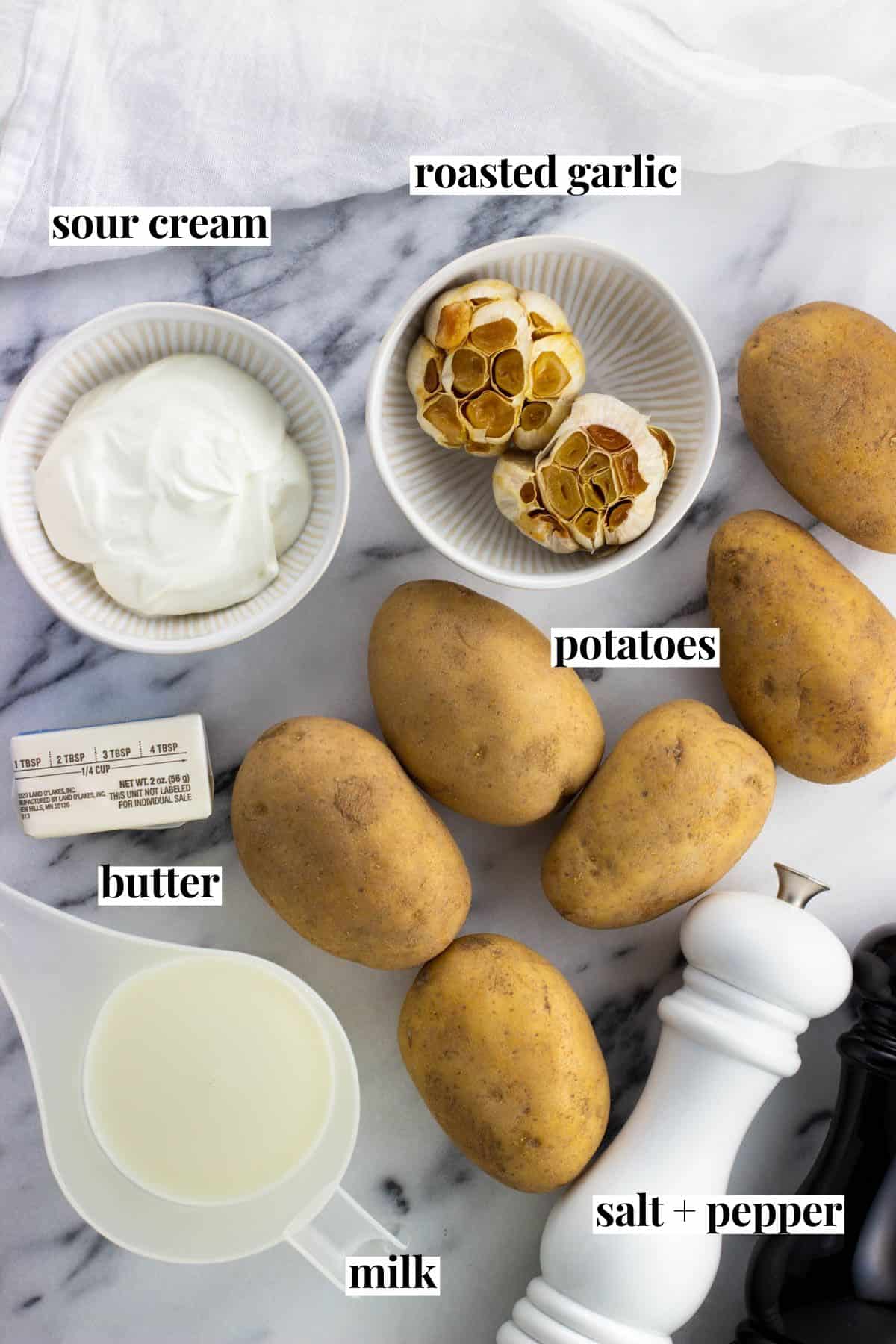
Potatoes: Use your preferred variety for making mashed potatoes. Pictured just above are yellow potatoes, but I will use either russet or yellow/Yukon gold depending upon what I have on hand. The final recipe photos here were taken when I used russet (I make these a lot!).
Garlic: The cloves of two whole heads, also known as bulbs, are used. The bigger the heads, the better.
Sour cream: Gives mashed potatoes a slight tang and creamy texture. While full-fat is ideal, light sour cream can work, too. I don't recommend using fat-free.
Milk: Use your preferred, though same deal as the sour cream in that something more than fat-free is best.
Butter: Unsalted butter is great to use so you can control the total amount of salt in the dish by adding it, though it's not the end of the world if all you have to use is salted. Just be sure to keep this in mind when salting to taste before serving.
Salt and pepper: No exact measurements are given as this is personal preference. Start small and increase the amounts used as needed.
Step-by-Step Instructions
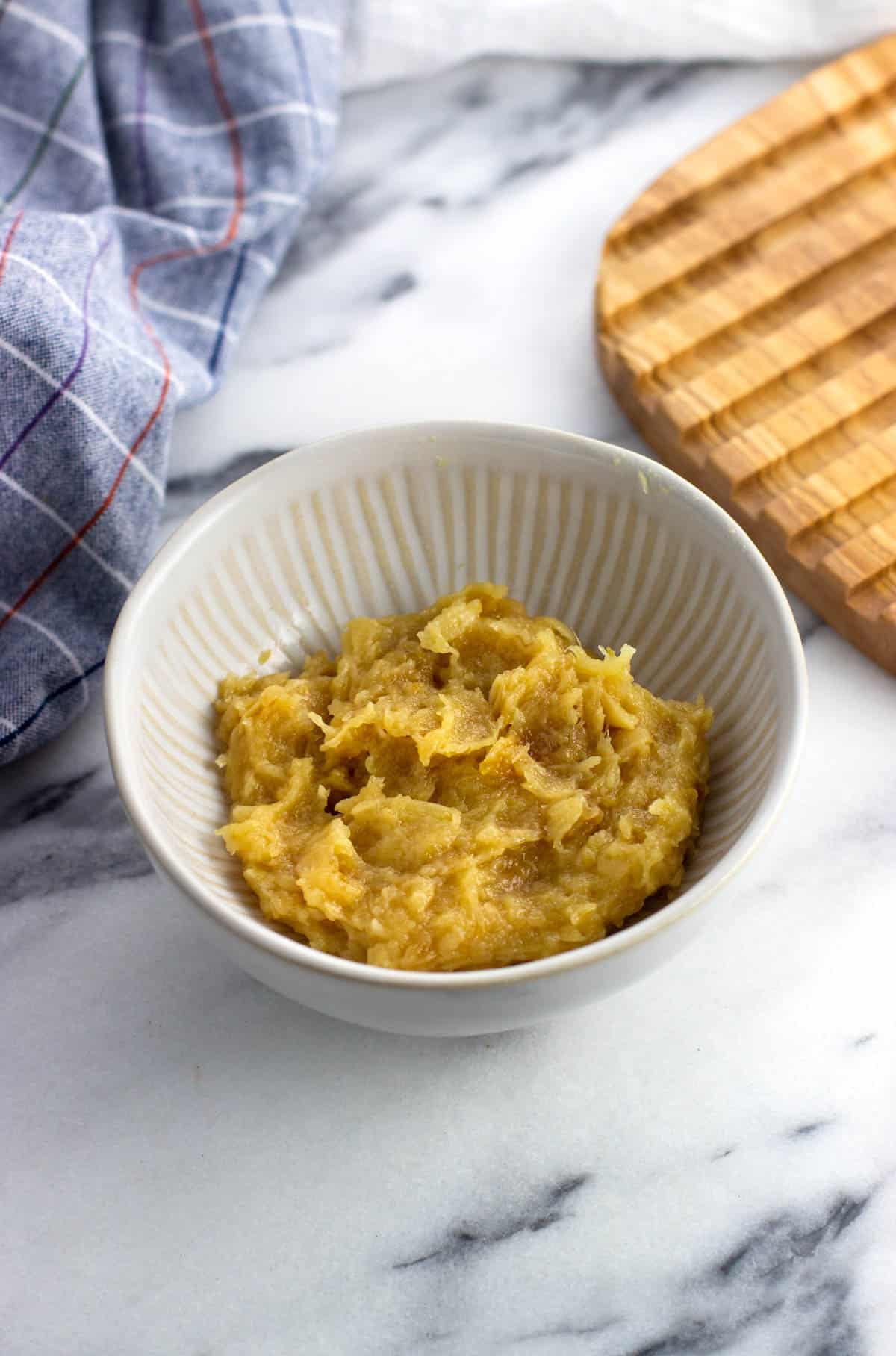
- Roast two heads of garlic (more discussion on this in my how to roast garlic post), then let cool enough to comfortably handle. Squeeze out the roasted cloves into a bowl and mash with the back of a spoon or a fork until it resembles a paste. It won't be perfectly smooth and that's fine.
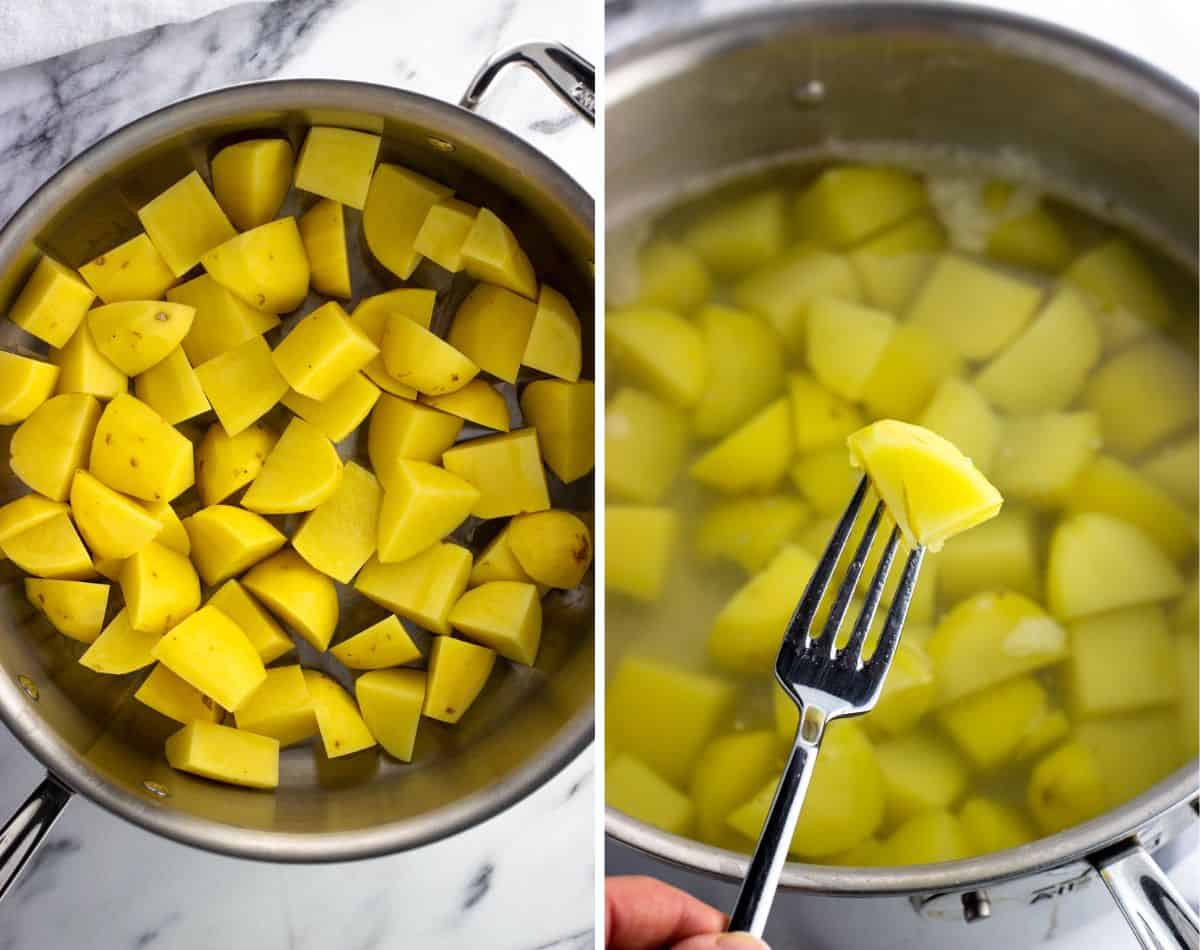
- Peel and slice potatoes into two-inch-ish chunks and add them to a large pot. Add enough water to completely cover them, then add 1 ¼ teaspoons of salt. Bring everything to a boil on the stove.
- Boil the potatoes for 15-20 minutes, or until fork-tender.
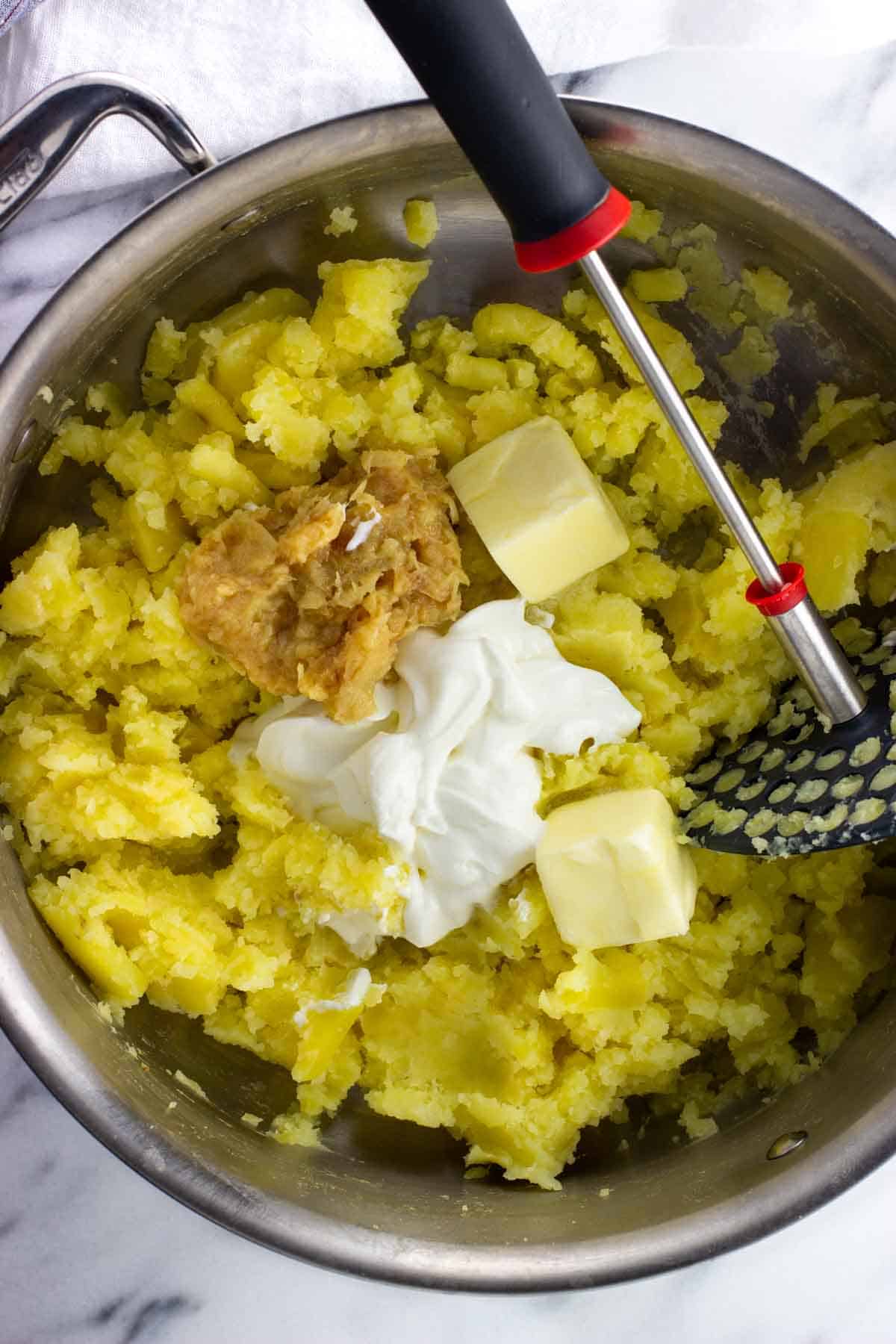
- Drain the potatoes and add them back to the pot. Mash the potatoes with the roasted garlic paste, sour cream, and butter. Stir to combine as the butter melts.
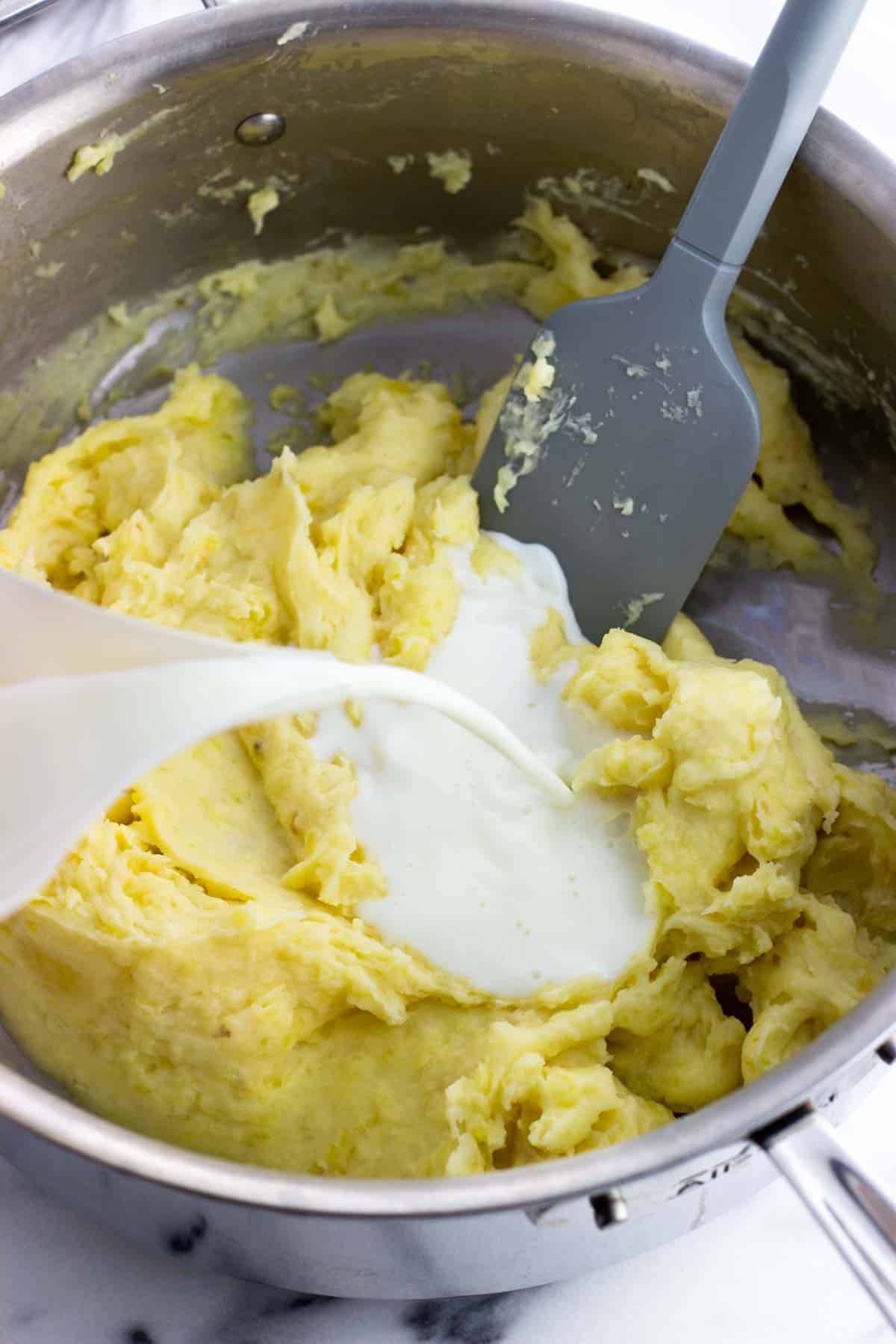
- Once combined, stir in the milk. Season with salt and pepper (or whatever else you like!) to taste before serving.
Recipe Tips and Tricks
- Use room temperature ingredients. It's best to bring the butter, milk, and sour cream to close to room temperature before mixing with the potatoes. This will cut down on the stirring necessary to combine everything. Over-stirring can lead to "gluey" mashed potatoes.
- Salt in stages. How salty you like your potatoes is a very personal thing! I like to boil the potatoes in salted water to start the process (it helps the potatoes absorb the salt evenly), then finish by seasoning to taste when serving.
- Mash by hand. While certainly speedy, using an electric mixer to make mashed potatoes can also overwork them and degrade the texture.
- Add milk slowly. Add the milk in increments to ensure you get the consistency right where you want it. It's harder to come back from too soft and liquid-y mashed potatoes, so start with one-quarter cup and see if you'd like more.

More Recipes to Use Roasted Garlic
- Roasted garlic hummus strikes a balance between having a sufficient, present flavor without overwhelming. This recipe is way better than store-bought!
- Toasty, crusty bread or grilled steaks are taken over the top with a dollop of roasted garlic butter. Compound butters also freeze well to preserve leftover portions.
- While I'm not telling you to totally switch up your Thanksgiving menu, adding something extra makes roasted garlic creamed corn a savory, roast-y treat.
- All I have to say is that there are three types of garlic in this roasted garlic bread.

Note: The finished dish recipe photos in this post were updated in September 2025 from the initial publish date in October 2022. I tweaked the method slightly to reflect my current preference towards boiling potatoes in salted water, and lowered the overall milk quantity written to help prevent the risk of an overly soft texture.
(And for all you eagle eyes, I also used russet potatoes instead of the yellow potatoes featured in the ingredient and process shots.)
More Holiday-Worthy Side Dishes


Did you enjoy this recipe? I’d love for you to leave a star rating and a comment review in the recipe card below!

Roasted Garlic Mashed Potatoes
Ingredients
- 2 whole heads garlic
- 1 Tablespoon (15 ml) olive oil divided
- 2 pounds (907g) russet or yellow potatoes peeled and cut into 2-inch chunks
- 1 ¼ teaspoons fine salt more to taste for serving
- 4 Tablespoons (57g) unsalted butter room temperature
- ½ cup (4 ounces, 113g) sour cream room temperature
- ¼ to ½ cup 2% milk (or your preferred kind) start with ¼ cup, ideally room temperature
- Ground black pepper to taste
Instructions
- Roast the garlic: Heat oven to 400°F (204°C). Remove all but the innermost layer of skin from the heads of garlic, then slice off the top ¼-inch or so of each head to expose the top of the cloves. Place each head on a sheet of aluminum foil, then drizzle olive oil evenly over the cut sides of both heads to coat the surface entirely. Wrap the cloves completely with the cut sides up in foil, then place in a baking dish or on a rimmed sheet pan. Roast for 40-45 minutes, or until the cloves are a deep golden brown and soft and tender.
- Mash the garlic paste: Let the roasted garlic cool enough to safely handle, then remove the cloves and place in a bowl. You can often just squeeze them out. Mash them up with the back of a spoon or a fork until a thick paste forms.
- Boil the potatoes: Peel and cut potatoes into two-inch pieces. Place them in a large pot and add enough water to completely submerge them. Sprinkle in 1 ¼ teaspoons of fine salt. Boil for 15-20 minutes, or until a fork can easily be inserted into a large piece. Drain the water and then place the pot back onto the now turned-off burner for a minute or two so that any excess water in the pot evaporates. Remove the pot from the heat.
- Mash: Add the roasted garlic paste, butter, and sour cream to the pan with the potatoes and mash well with a potato masher as the butter melts.
- Add milk and season: Pour in ¼-cup of the milk and stir to evenly combine. Add the rest in smaller increments if you'd prefer a thinner consistency. Season to taste with salt and pepper before serving.
Notes
- Room temperature ingredients reduce the amount of stirring required, which prevents the texture from becoming "gluey" as can happen with over-mixing.
- Store leftover mashed potatoes in an air-tight container in the refrigerator for up to 3-4 days.
Would you like to save this?
Plus receive periodic recipe newsletter emails.
Nutrition
Nutritional information is provided as an estimate. As it can vary due to many factors (brands used, quantities, etc.), we cannot guarantee its accuracy.
Food Safety and Nutrition Disclaimer
Comments
No Comments