

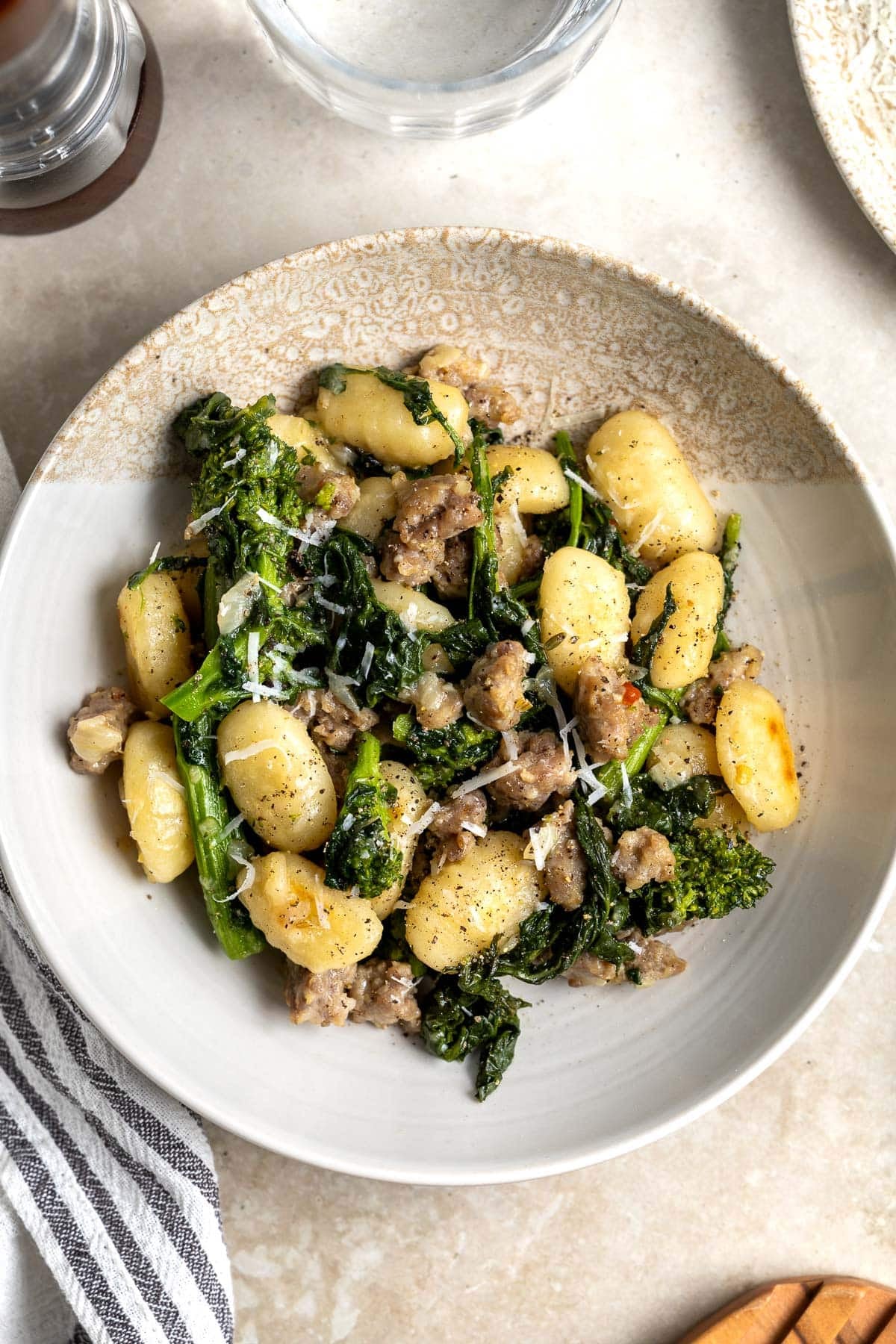
Swap out standard pasta for pan-toasted gnocchi in this gnocchi with sausage and broccoli rabe skillet recipe. No boiling or blanching required! Gnocchi, sausage, and broccoli rabe all cook in the same pan for a classic Italian-American pasta dish with less dishes and fuss.
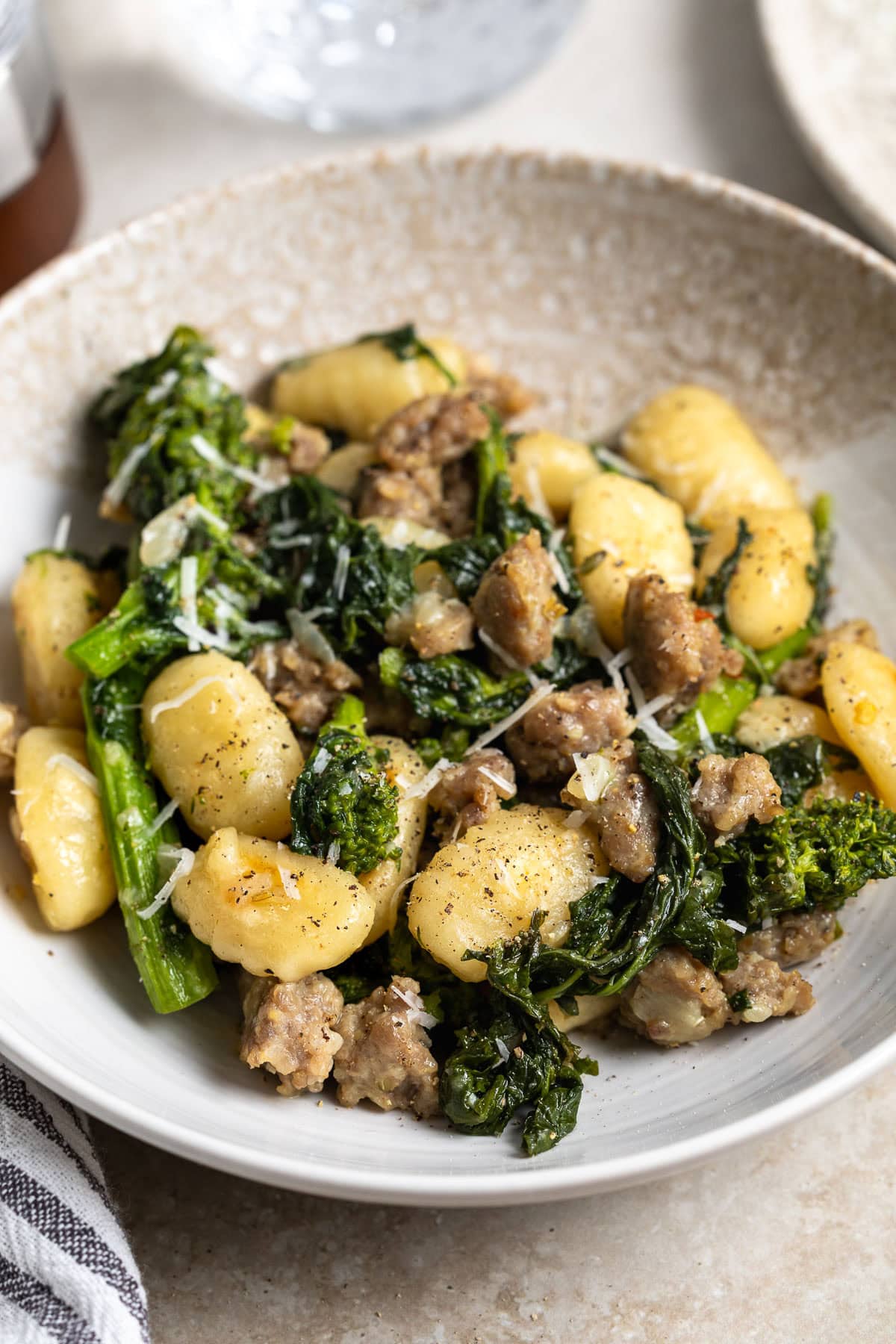
Cutting down on the number of dishes dinner creates has become even more critical since becoming a parent. While this gnocchi, sausage, and broccoli rabe skillet isn't the fastest dinner I've ever made, the fact that I just have to hand wash a pan, a cheese grater, and possibly a knife (if not using one that's dishwasher-safe) at the end of it makes me very happy on a weeknight.
Setting aside convenience for a sec, these flavors are a classic combination for a reason. You'll usually find this dish made with pasta (often orecchiette), which joins with the perfectly mellowed-out bitterness of sautéed broccoli rabe and boldly-seasoned Italian sausage for a nicely rounded meal.
Nothing against orecchiette, but I'm partial to my favorite pan-toasted gnocchi here instead for a few reasons:
- They grab ahold of the sauce: The simple little sauce of reduced broth, cheese, lots of freshly-cracked black pepper, and a pat of butter coats them beautifully with just enough chew.
- Convenience: Pan-toasting gnocchi means you don't need to set up a pot of water for them to boil.
- Texture: I think pan-toasting the gnocchi leads to a better texture once the dish combines. They're never mushy or too firm.
Overall, we love this one! Toddler included.
Recipe Ingredients
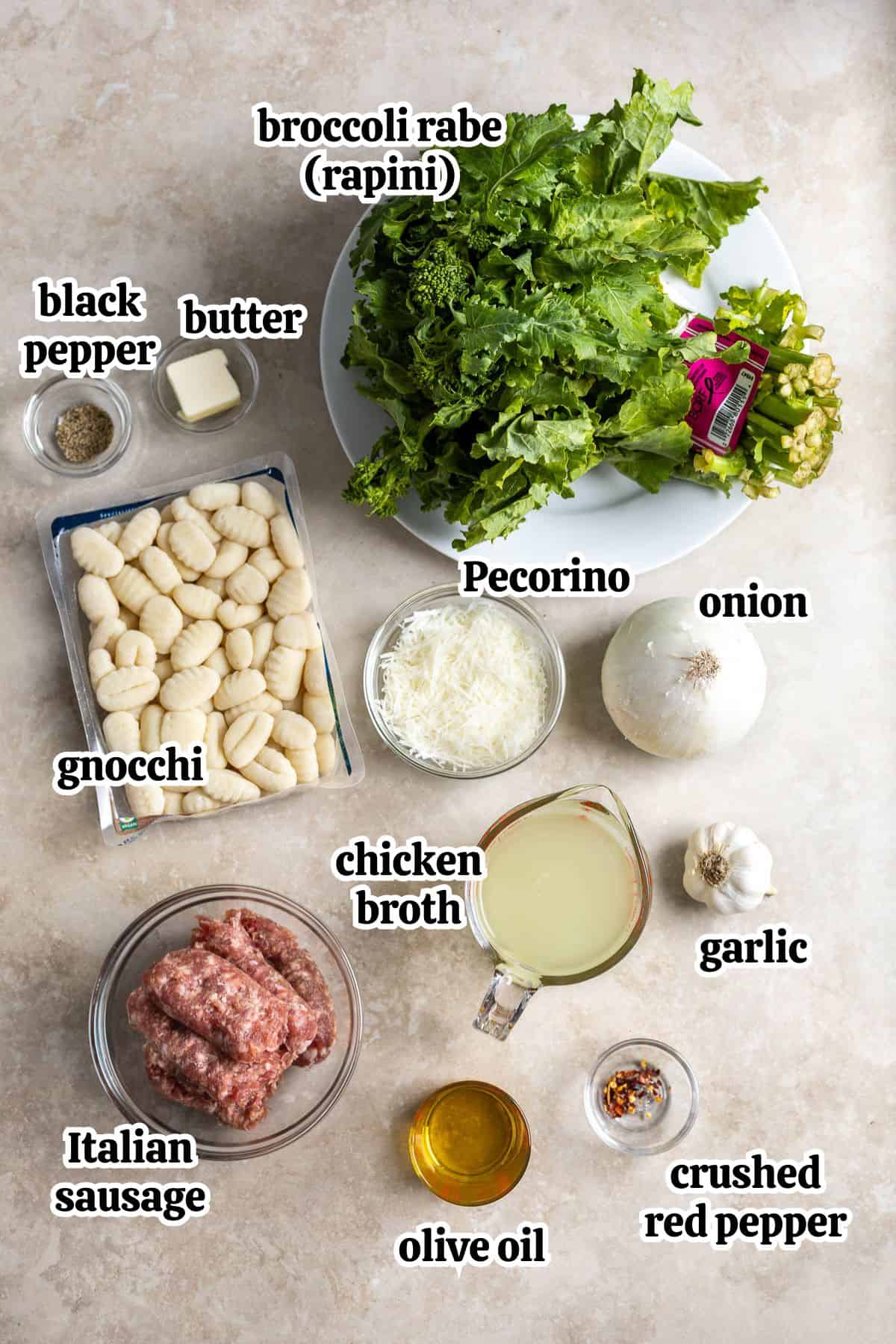
- Gnocchi: I think the shelf-stable gnocchi found in the dry pasta aisle to be a bit sturdier for pan-toasting than refrigerated gnocchi, so they're my pick for this gnocchi, sausage, and broccoli rabe skillet.
- Italian sausage: Sweet Italian sausage is the move. I just love how pronounced the sweet basil note is in these, which cuts down on the number of ingredients you need to provide a well-rounded flavor. That said, hot Italian sausage is also a good option if they're more convenient or if you'd like some heat.
- Broccoli rabe (a.k.a. rapini): The bunches at my grocery store are on the larger side, roughly 14 ounces each. You'll need to trim away the tough ends and then slice it into pieces at least two inches long. This is not broccolini/baby broccoli, which doesn't have that wonderfully bitter flavor note and cooks with different timing.
- Chicken broth: I always use reduced-sodium broth in my kitchen. Keeping a jar of reduced-sodium chicken bouillon base (paid link) in the fridge comes in handy big time when you just need a small amount for a recipe, like the ¾-cup here. I've diluted the amount seen here with ¼-cup water to keep the saltiness in check.
- Pecorino Romano: Punchy and salty for the perfect finishing touch. While the flavor is not quite the same, Parmesan can be used if you'd rather. With any hard Italian cheese, I find freshly-grated to be a worthwhile extra effort for the flavor payoff.
Step-by-Step Instructions
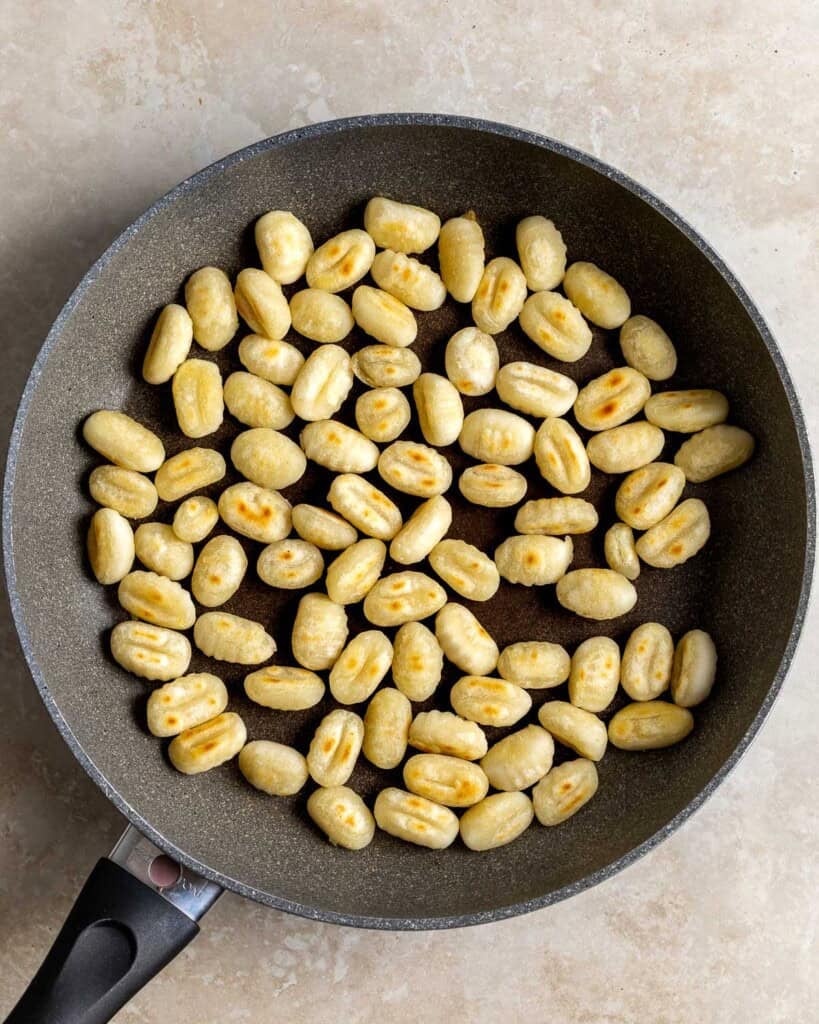
Toast the gnocchi.
Heat olive oil in a large skillet, add gnocchi, then stir to coat. Cook, stirring often, until golden-brown spots develop on all sides of the gnocchi. Transfer these to a plate for now.
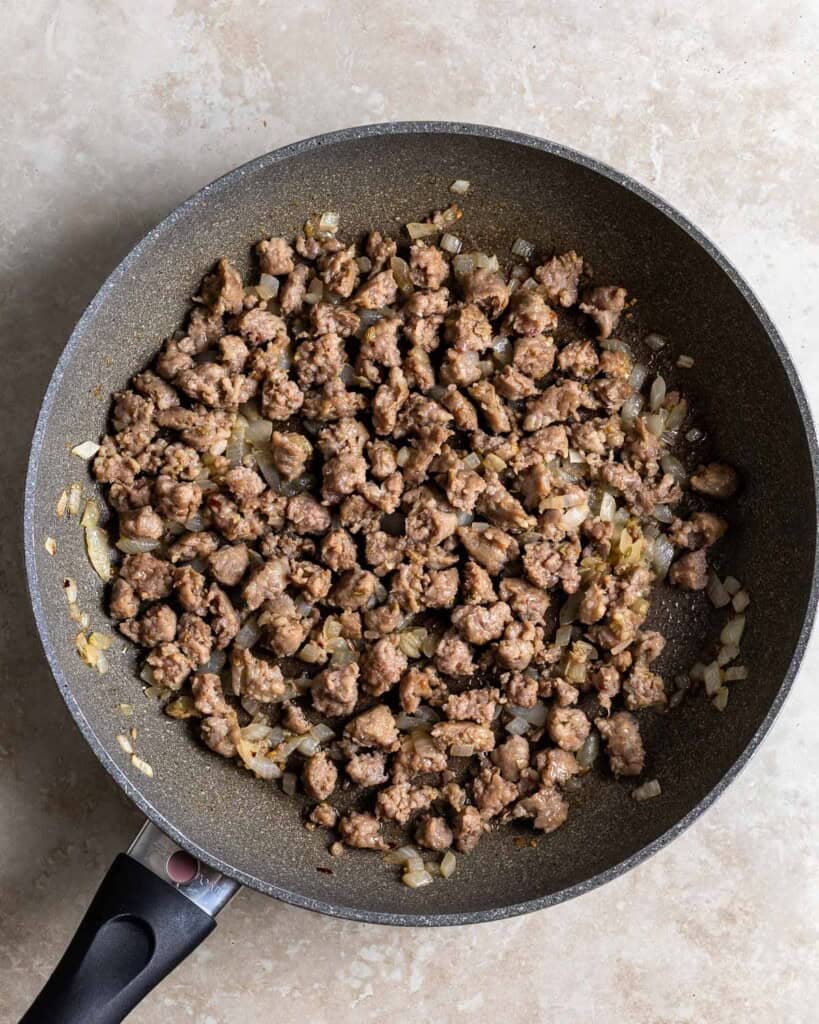
Cook the onion, garlic, and sausage.
Add the remaining olive oil to the now-empty pan. Sauté the onion for a few minutes just to soften, then add the garlic and crushed red pepper. Add the sausage and cook and crumble until fully cooked.
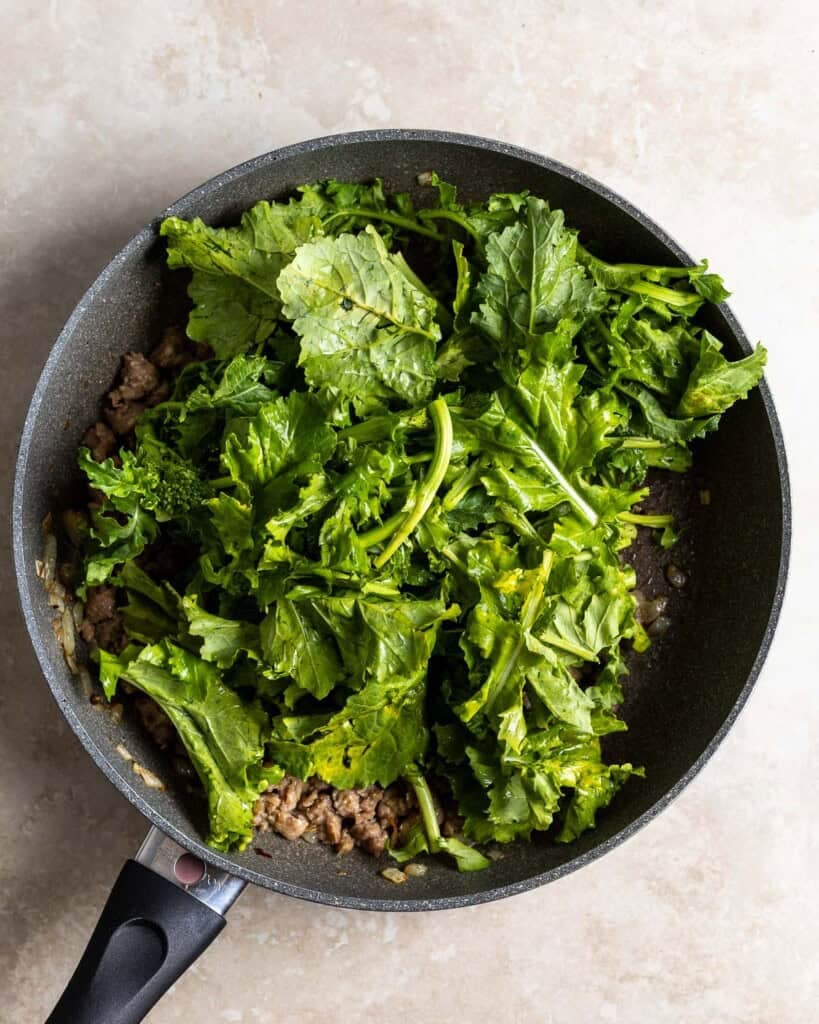
Add the broccoli rabe.
Work in batches to add the broccoli rabe to the pan. (The first batch will begin to wilt and more room will free up in the pan for the next). Once it's all in there, pour in the broth and water and bring to a simmer.
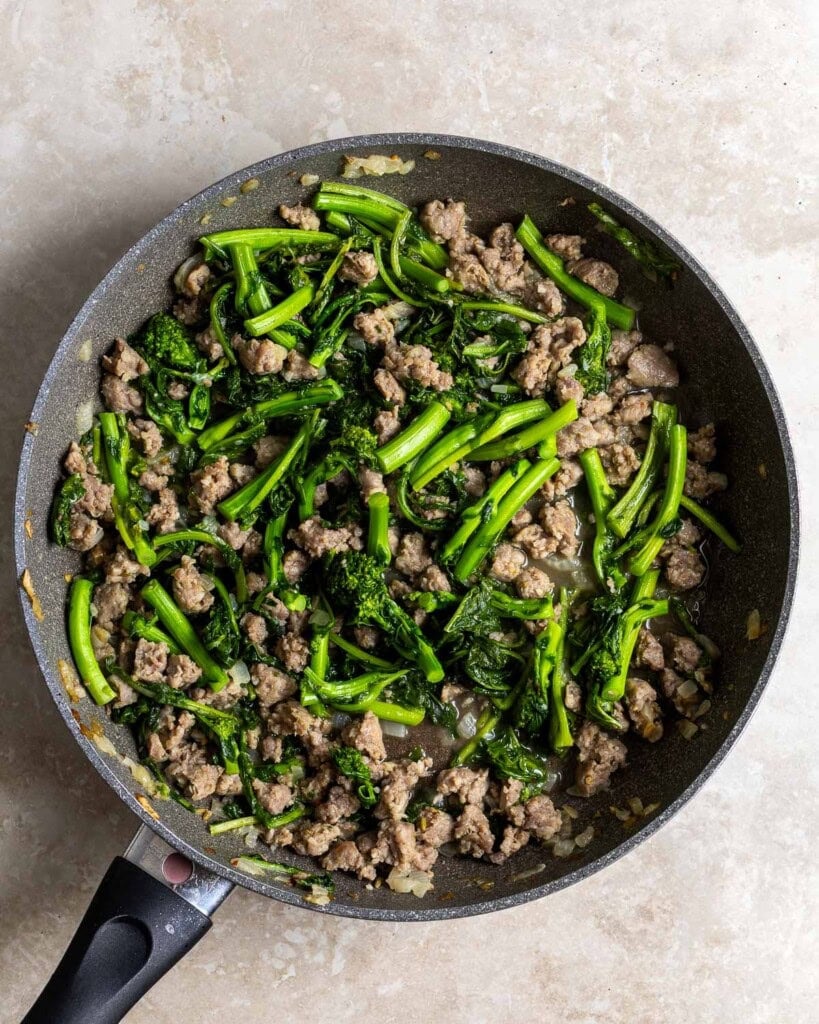
Cook until wilted.
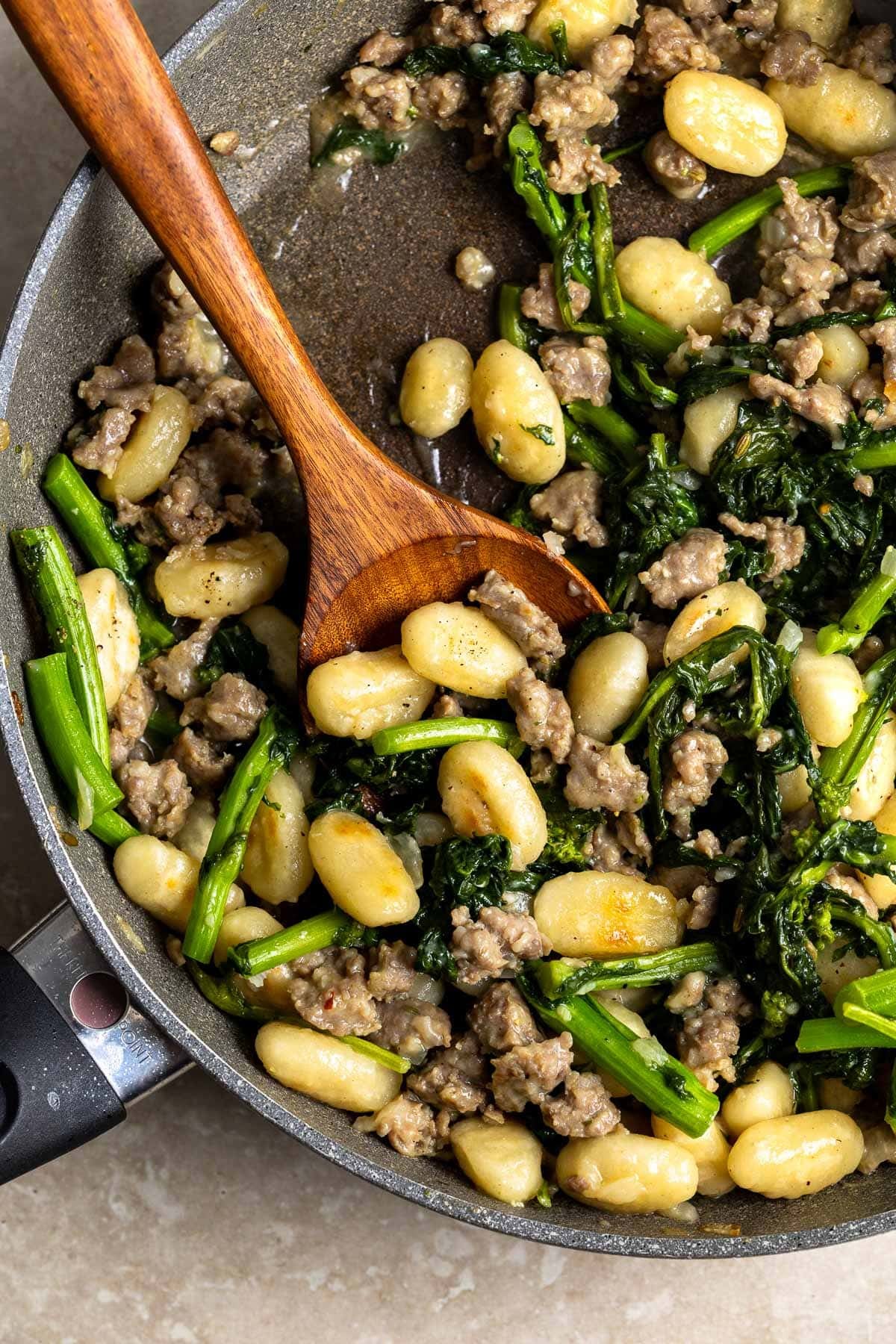
Simmer, keeping the pan uncovered to allow the liquid to reduce while the broccoli rabe wilts over the next 4-5 minutes. Use tongs or a spatula to stir often. Once wilted, add the gnocchi back, season with black pepper, and toss with Pecorino and butter before serving.
Tips and Tricks
- Don't chop up the broccoli rabe too finely... Broccoli rabe wilts as it cooks, so starting out with segments about 2 - 2.5 inches long yields perfectly bite-sized pieces.
- ...and don't buy it too early. In my experience broccoli rabe goes bad fairly quickly. If possible, I wouldn't buy it longer than 2-3 days ahead of when you plan to cook it.
- Use a large pan. This helps brown the gnocchi all in one layer and makes for less mess when tossing the gnocchi, broccoli rabe, and sausage at the end. My workhorse 12-inch skillet (paid link) from the linked set does the job here.
- Go easy on the salt. You'll see I don't call for separately added salt in this one, as Italian sausage, chicken broth, and Pecorino are all salty themselves. Take a taste before serving and add salt as needed at that point. I usually don't add any.
- Extra sausage? Packs of Italian sausage links are often +/- 19 ounces, leaving you with two extra links. I like to use my leftover ones as a pizza topping.
- To really get into the details: Not to wildly micromanage your eating experience, but broccoli rabe has a tendency to stick in your teeth. I'd pack some floss just in case if bringing leftovers on-the-go for lunch.
More Italian-American Pasta Favorites

Did you enjoy this recipe? I’d love for you to leave a star rating and a comment review in the recipe card below!
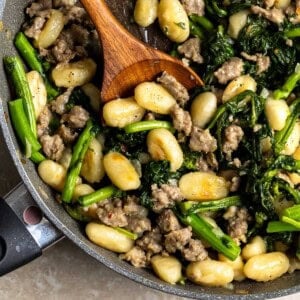
One-Pan Gnocchi with Sausage and Broccoli Rabe
Ingredients
- 2 Tablespoons olive oil divided
- 1 16-ounce package gnocchi
- Half of a large onion diced
- 4 cloves garlic minced
- ⅛ teaspoon crushed red pepper or to taste
- 11 ounces ground sweet Italian sausage (about 3 link's worth), or hot
- 1 large bunch (about 14 ounces) broccoli rabe (rapini) ends trimmed then chopped into 2 - 2 ½-inch segments
- ¾ cup reduced-sodium chicken broth
- ¼ cup water
- ½ cup finely-shredded Pecorino Romano more for serving
- 1 Tablespoon unsalted butter
- Ground black pepper to taste
- Salt to taste, if needed
Instructions
- Heat 1 tablespoon of olive oil in a large (ideally 12-inch) skillet over medium heat. Add the gnocchi and stir to coat them in oil, breaking up any gnocchi that are stuck together with a spatula. Toast the gnocchi for 10-13 minutes, stirring often, or until golden-brown spots develop. Add an extra drizzle of olive oil as needed if the pan is seeming too dry. Transfer the gnocchi to a plate and set aside for now.
- Add the remaining tablespoon of olive oil to the now-empty pan and set it back on the stove over medium-low heat. Add the onion and cook for 4 minutes to soften (not brown), then add the garlic and crushed red pepper and cook for 1 minute more.
- Add the ground sausage (removed from its casings if in link form) and cook fully, breaking the sausage up into crumbles as it cooks.
- Once the sausage crumbles are fully cooked, add as much of the broccoli rabe as will fit in the skillet - you'll have to work in batches. Use a spatula or tongs to move the broccoli rabe around the pan as it begins to darken and wilt. Add more broccoli rabe as extra space frees up in the pan - the whole bunch should make it in there within 2-3 minutes.
- Once all of the broccoli rabe is in the pan, pour in the chicken broth and water and adjust the heat to bring the liquid to a simmer. Simmer uncovered for 4-5 minutes, or until the broccoli rabe is all wilted with tender stem pieces. The liquid will have cooked down most of the way but the pan shouldn't be fully dry.
- Add the toasted gnocchi back to the pan and stir to coat. Sprinkle the Pecorino in the pan and add the butter, stirring everything up as the cheese and butter melt. Season with ground black pepper and salt, if desired, before serving with extra Pecorino.
Video
Notes
- Preparing broccoli rabe: Discard any yellowing, discolored, or slimy pieces then rinse. Thoroughly patting dry isn't necessary as it will cook down in liquid, but do give it a cursory pat down. Trim away any rough ends, then slice each piece (the whole thing - stems, leaves, and florets) into 2- to 2 ½-inch segments. Extra-thick stem pieces can be tough so you may want to peel or halve them to ensure they cook in the same time frame.
- Make it spicier: This quantity of crushed red pepper brings more flavor than spice. Add more to taste.
- Storage: Store leftovers in an air-tight container in the fridge and enjoy within 4 days.
Would you like to save this?
Plus receive periodic recipe newsletter emails.
Nutrition
Nutritional information is provided as an estimate. As it can vary due to many factors (brands used, quantities, etc.), we cannot guarantee its accuracy.
Food Safety and Nutrition Disclaimer
Comments
No Comments