

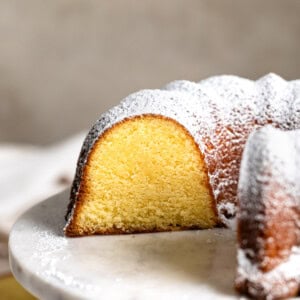
Enjoy classic bakery flavor at home with this Philly Fluff cake recipe! This extra-rich cream cheese pound cake uses the reverse creaming method for a supremely tender, velvety soft crumb. It's one party-perfect Bundt cake that stays moist for days.
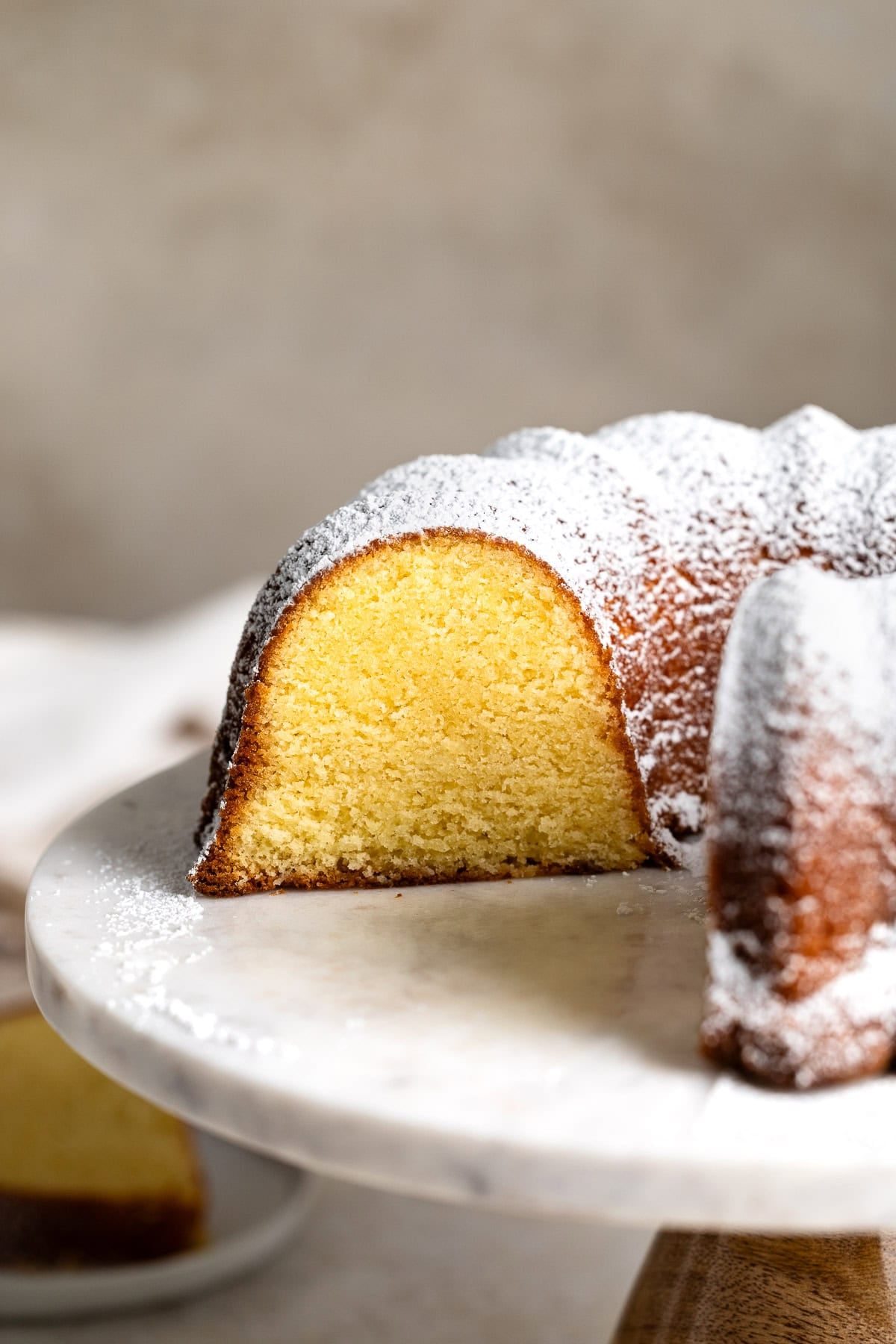
As a kid I was TOTALLY unaware of how good I had it that a relative would bring a Philly Fluff cake from one of the local, old school New Jersey bakeries to family parties. I assumed everyone could tuck into Philly Fluffs on a semi-regular basis before realizing it was a tri-state area specialty.
Now living far outside Philly Fluff territory, I've had to take matter into my own hands if I wanted a taste of what I think is the world's most perfect cream cheese pound cake. This recipe delivers!
What makes Philly Fluff cake special?
A fabulous creation originating from the now-closed Bruce's Bakery on Long Island, NY, a Philly Fluff is an ultra rich, even more velvety soft, and seriously impressive cream cheese pound cake with a very fine crumb thanks to the reverse-creaming method used. Despite its name, it's not a overly squishy, spongy, or airy kind of cake.
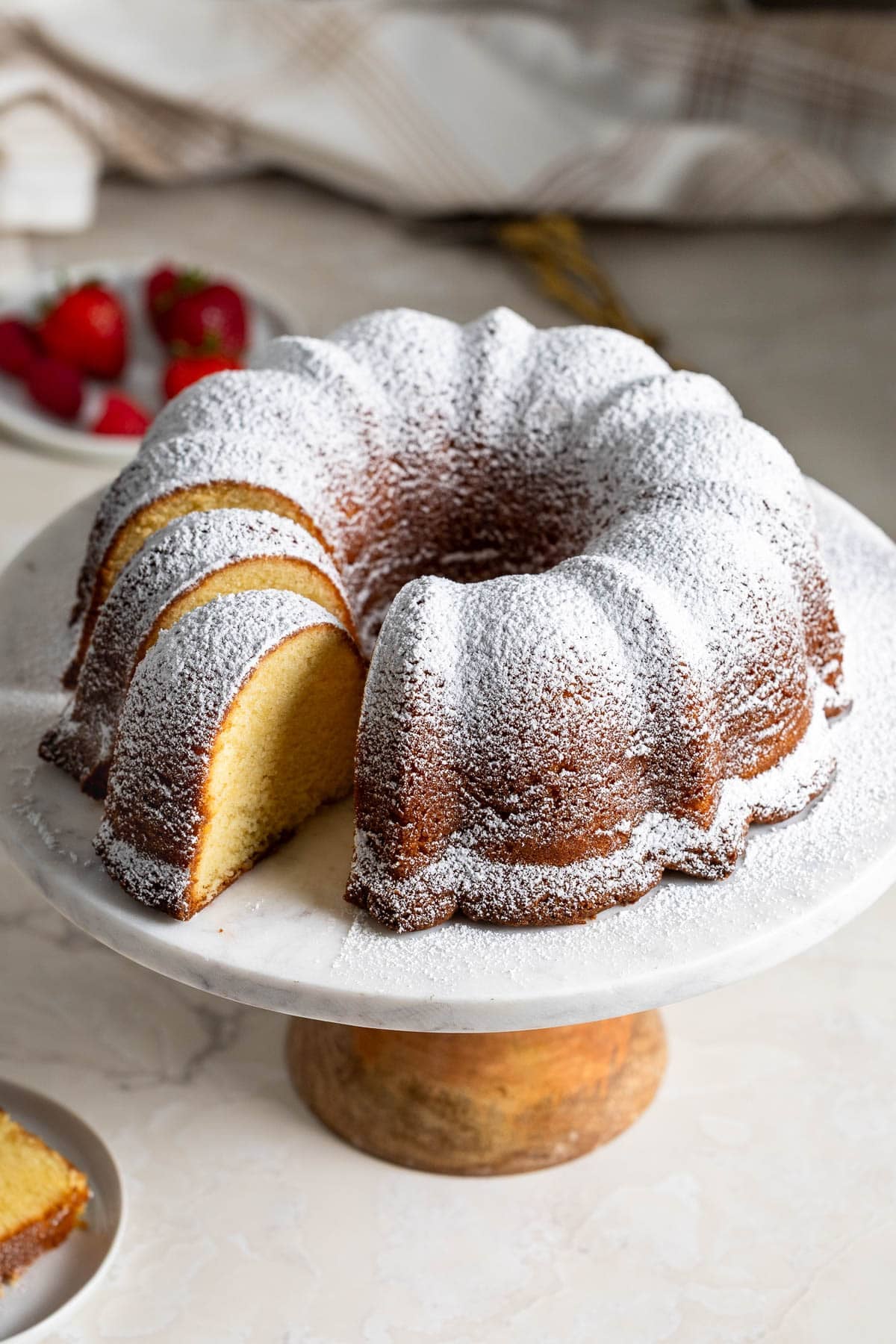
While I'm most familiar with the plain variety of Philly Fluff baked in a Bundt pan, you can sometimes find it available in loaf form and/or with chocolate swirled in. No matter the shape, a heavy dusting of powdered sugar over top is a delicious must.
The Recipe 4-1-1
This Philly Fluff recipe is adapted from the one shared by Bruce himself. I bought a used copy of the Bruce's Bakery cookbook so I could see with my own eyes how he makes it. Three things jumped out:
- The Philly Fluff recipe uses reverse creaming. In short, this is when you mix together the fat and the flour before adding liquids. This hinders gluten development. Hello, tender, fine, ultra soft and moist crumb.
- The original also calls for shortening... I'm not anti-shortening by any means (I use it in cucidati pastry), but my preference is to use butter in cakes like this for a deviation from the original. I replaced the shortening with European-style butter (slightly more fat than standard American butter) to make up for some of the missing shortening fat and find the result truly decadent. Could it be a smidge more light if I use shortening? Possibly, but I find my all-butter version of a Philly Fluff so nicely soft from the reverse creaming method that I think the better flavor that comes from using butter a worthy trade-off.
- ...and chocolate. I omit this for a pure cream cheese pound cake, like the one I grew up eating. Just my personal Philly Fluff preference.
Other tweaks I made include reducing the amount of cream cheese by two ounces to more conveniently use one 8-ounce block, and slightly bumping up the sugar to account for the lack of chocolate. Oh, and adding a smidge more salt to counter the extra sugar.
The verdict? Absolute perfection. It nailed my scent memory from the jump, and my taste memory followed in short order. This Philly Fluff cake recipe produces one seriously decadent, perfect cream cheese bundt cake. From personal experience, my crowd goes nuts when this thing shows up.
What You'll Need to Make a Philly Fluff
The below is just an overview of some of the key ingredients for Philly Fluff. See the recipe card at the bottom of this post for all of the specifics.
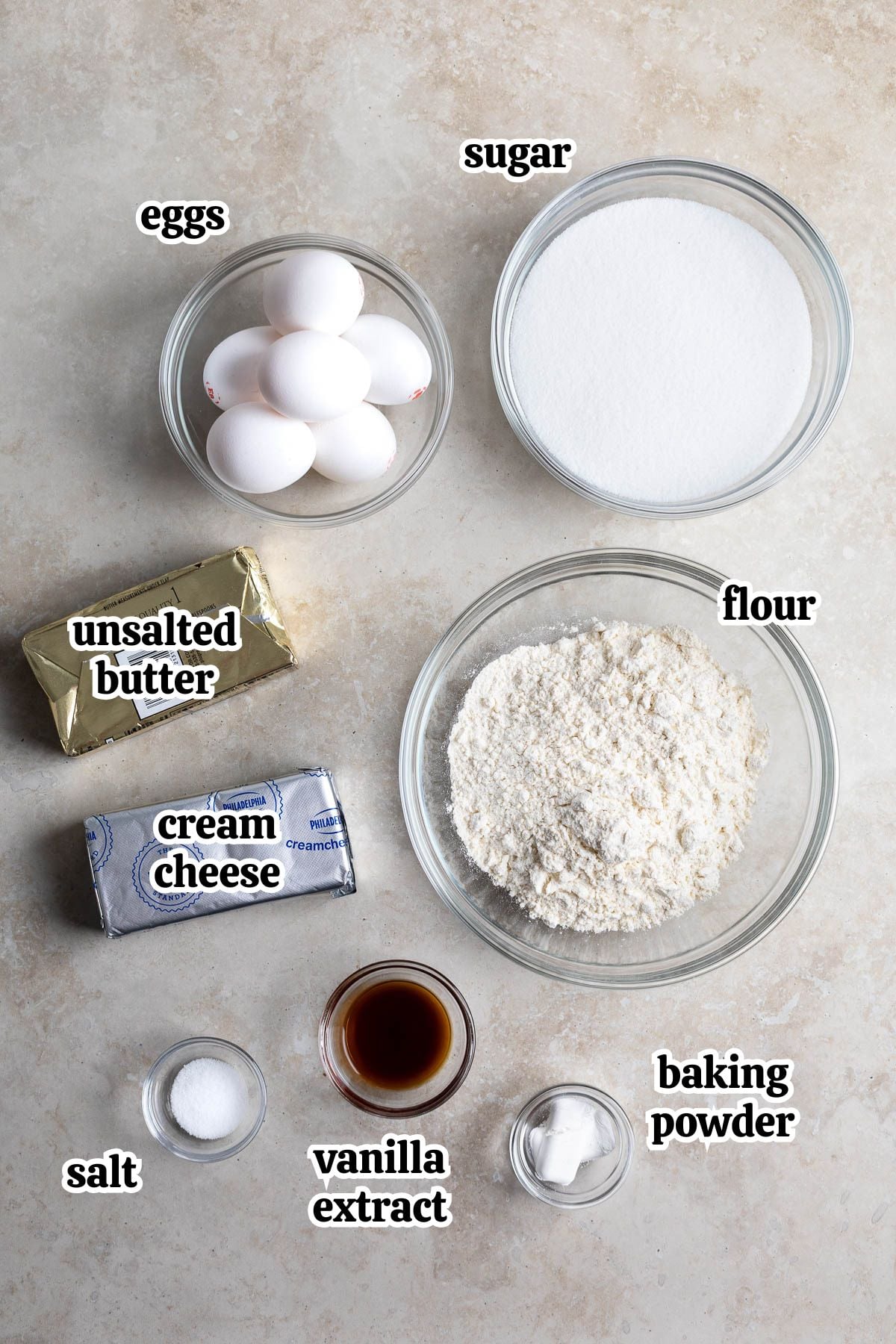
- Cream cheese: This is cream cheese in block form (not whipped in a tub). I highly recommend using full-fat cream cheese and not the reduced-fat Neufchâtel alternative for the most decadent flavor.
- Butter: I like to be a little extra and use European-style butter sticks as doing so will net you around 4% extra fat (remember I'm replacing some of the original recipe's shortening, which is all fat, with butter, which contains some water). That said, using standard American butter sticks are just fine, as is replacing one stick of butter with shortening (see recipe card notes). The other ingredients certainly don't skimp on richness.
- Flour: Weighing your flour is the gold standard to ensure a perfect bake, but if you don't use a scale, go with the spoon-and-level method detailed in the recipe card. Too little flour can cause a sunken, dense cake, while too much will dry it out.
- Baking powder: Philly Fluff batter is heavy (and there's a lot of it) so making sure your baking powder is fresh is key in making sure it rises high. I prefer to use a double-acting baking powder that's also aluminum-free to avoid any stray metallic tastes that some people can pick up.
All this comes together in a 12-cup Bundt pan (paid link, this is my Nordic Ware pan), which you'll thoroughly grease with butter and flour, or coat with a non-stick pan release spray that does the job (like Baker's Joy) or your favorite tried-and-trusted homemade cake goop.
Step-by-Step Instructions
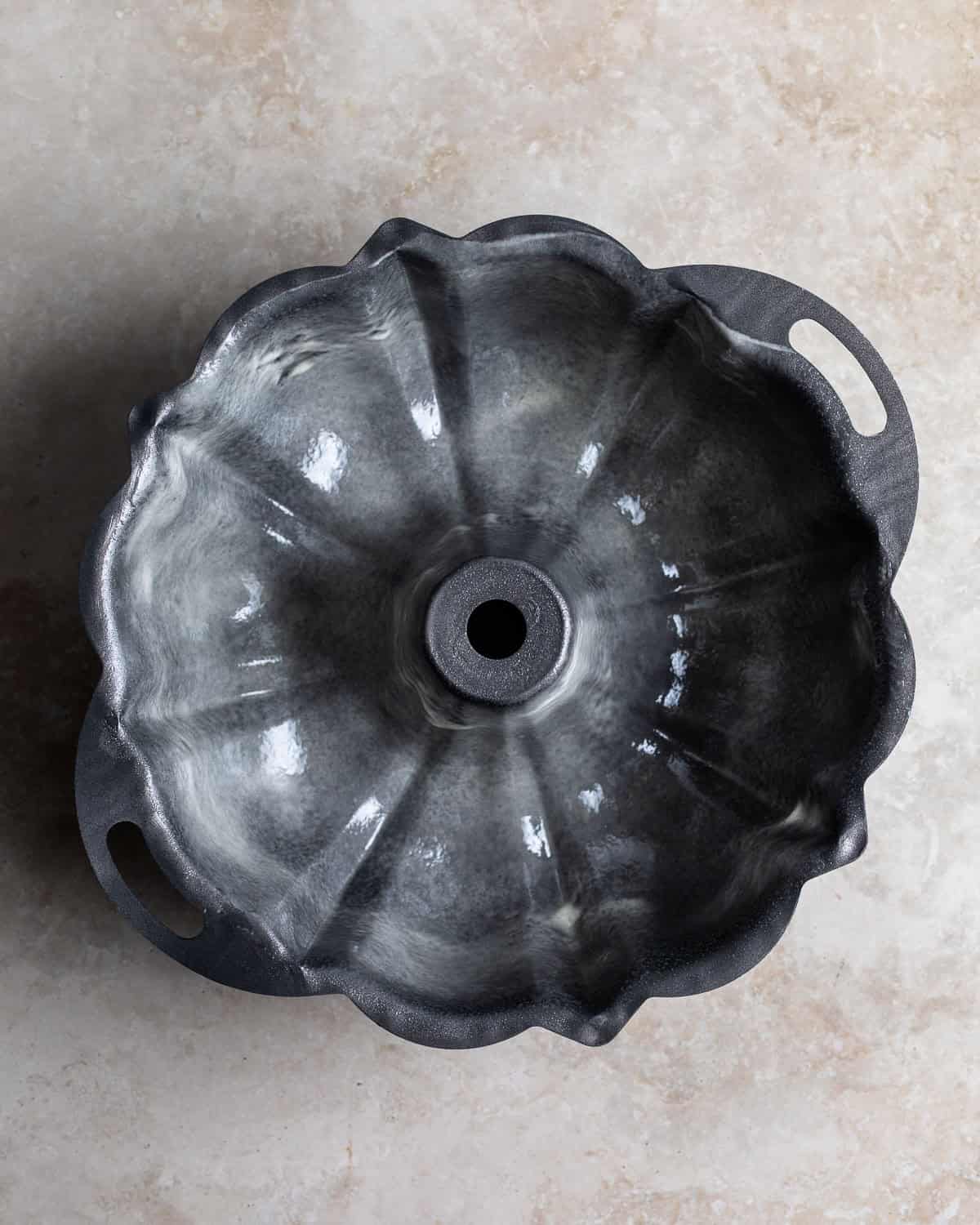
- Step 1: Thoroughly grease and flour your Bundt pan, taking care to cover all of the angles, creases, and crevices of your particular Bundt pan.
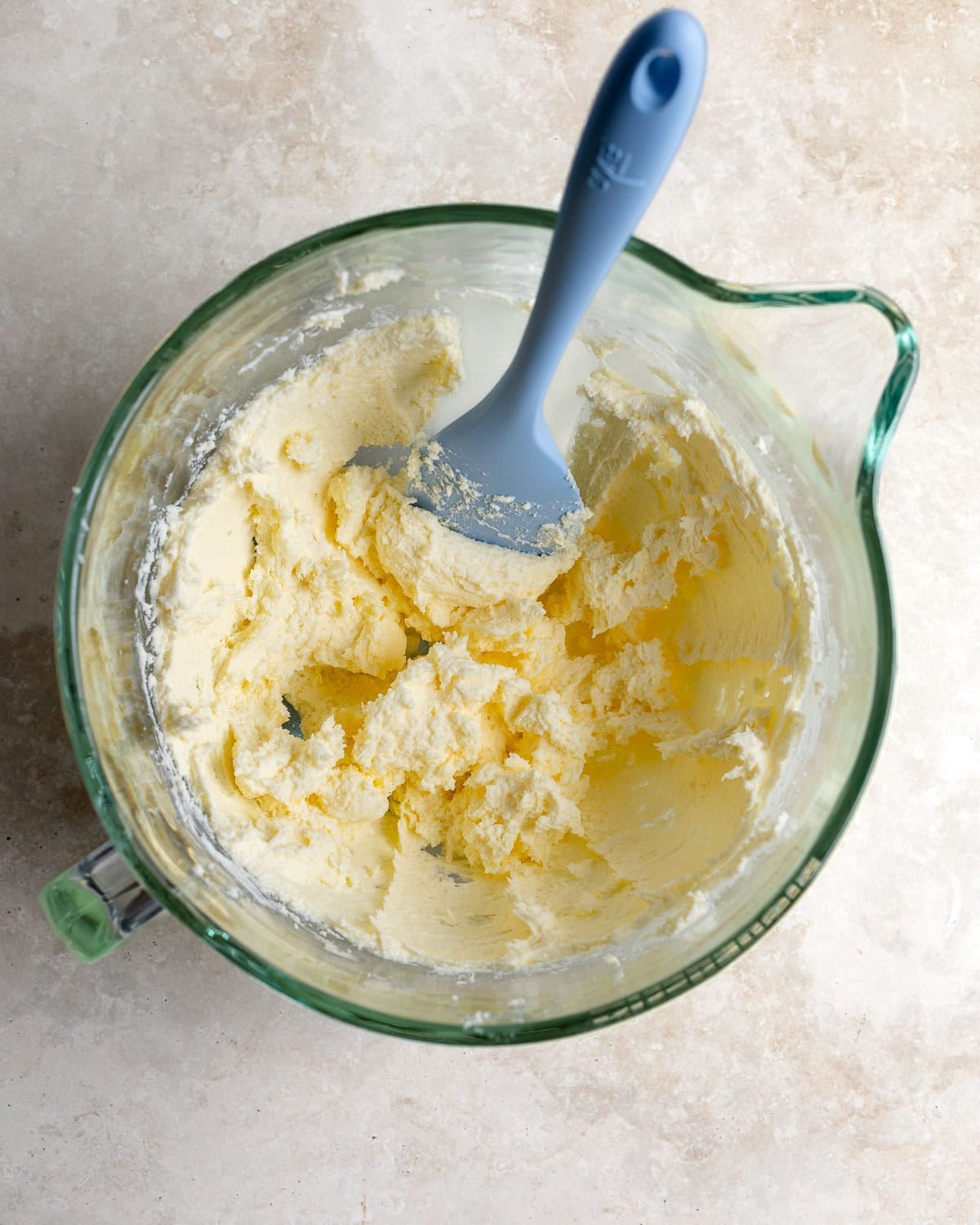
- Step 2: Cream the cream cheese and butter with an electric mixer for 2-3 minutes until lighter in color and fluffier in texture.
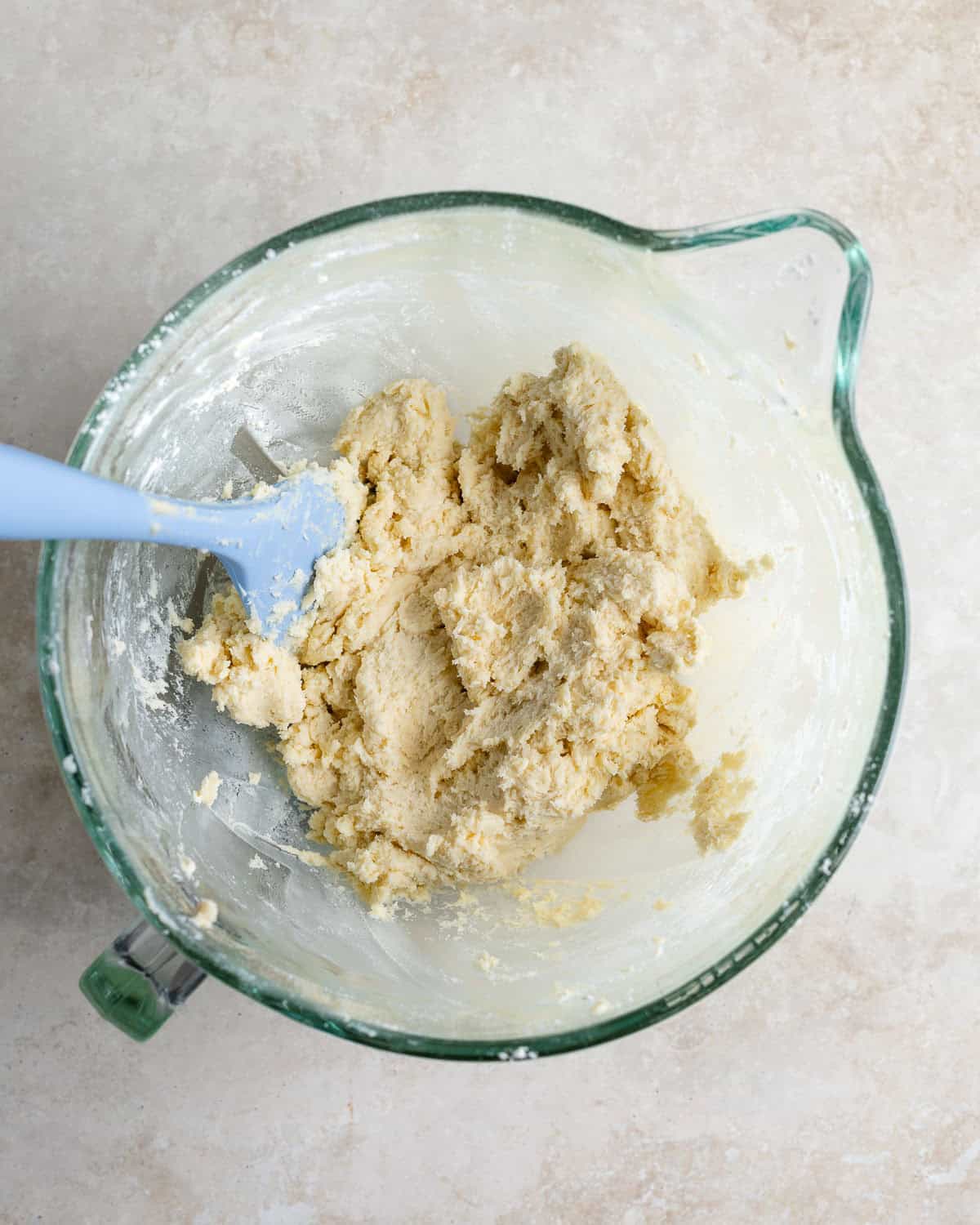
- Step 3: Separately combine the flour, baking powder, and salt, and fully mix it into the creamed cream cheese/butter on low speed.
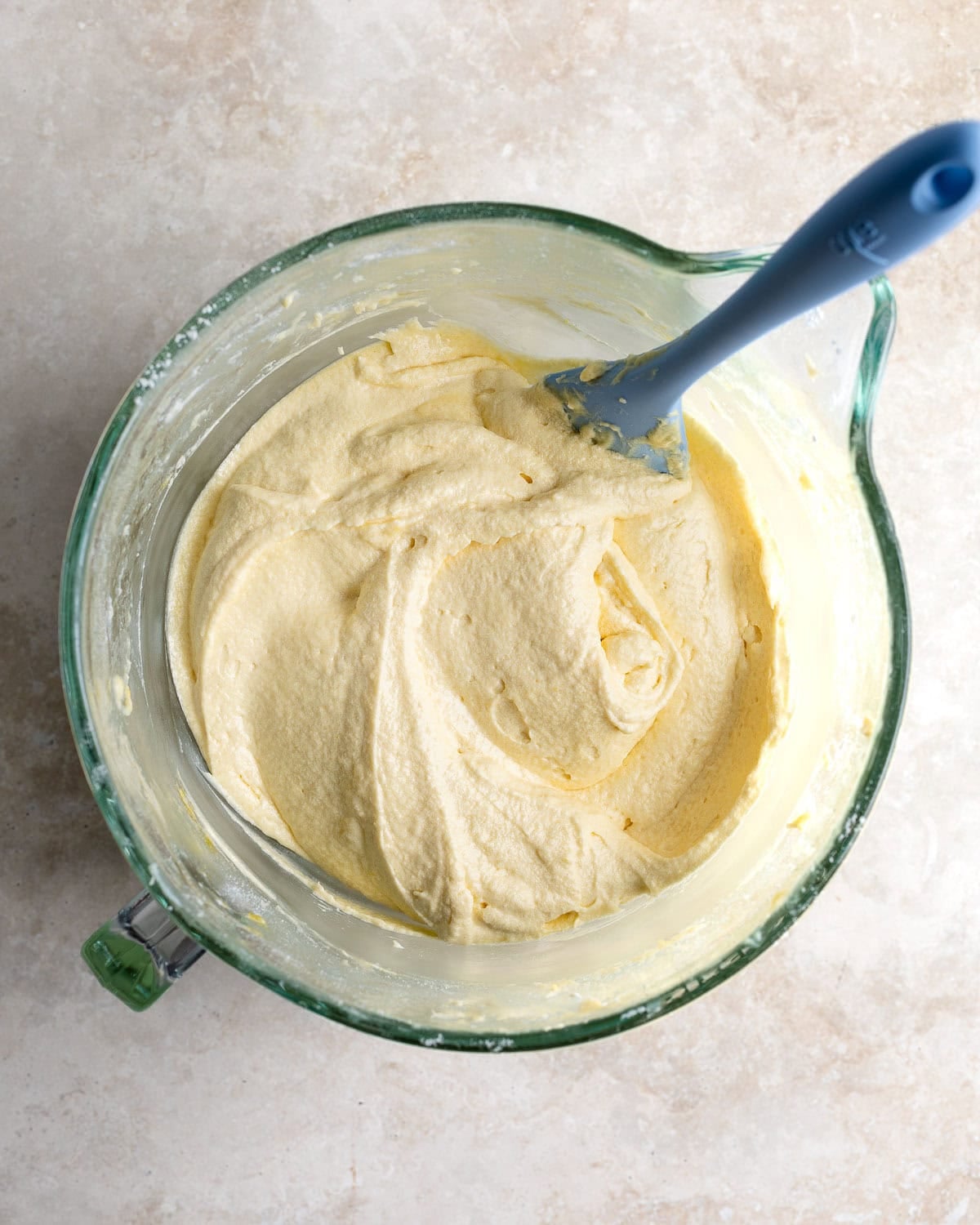
- Step 4: Add 1 cup of the sugar and the eggs (add eggs one at a time and beat after each addition). Scrape down the sides as needed.
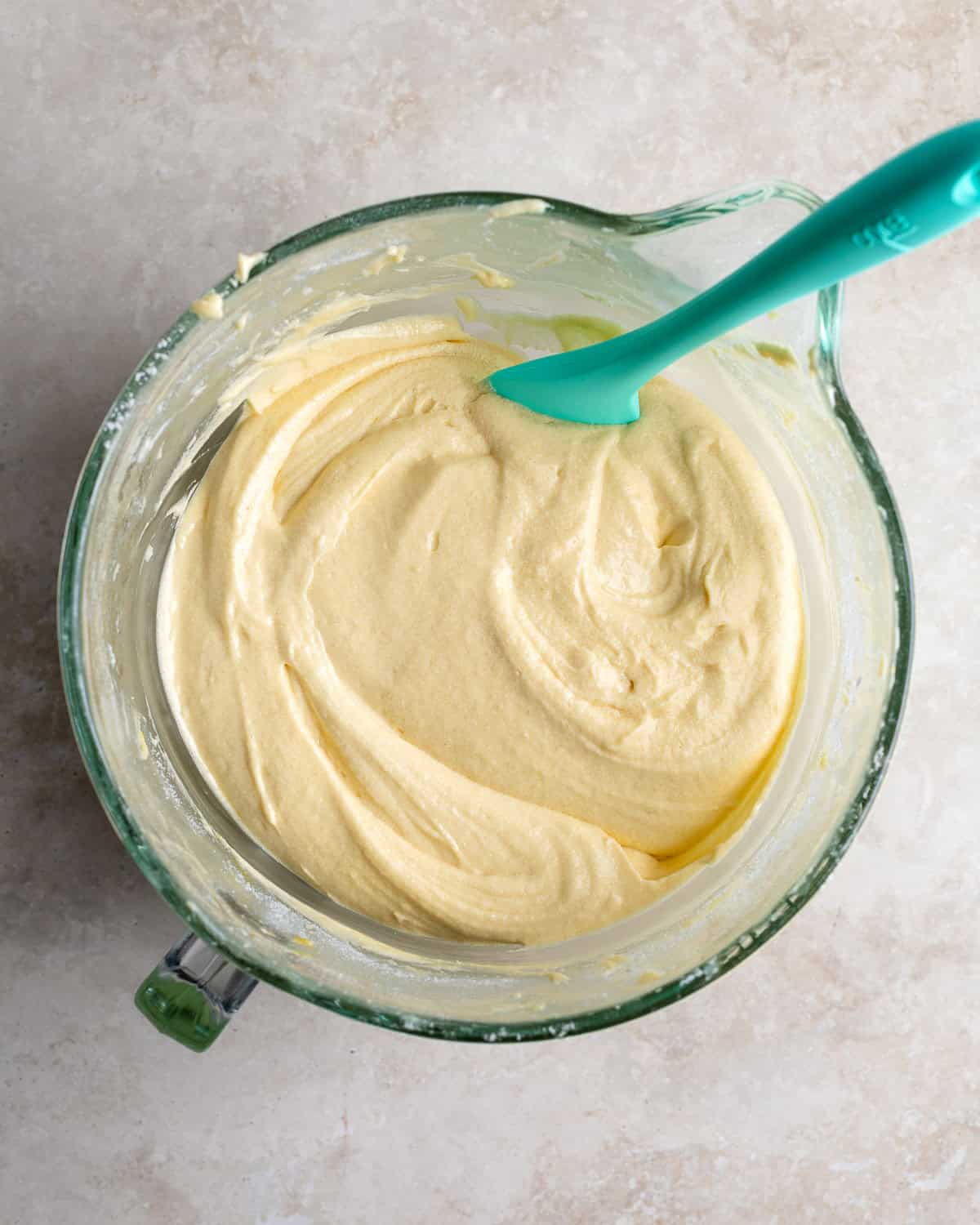
- Step 5: Mix in the remaining 1 ¼ cup sugar and the vanilla extract until nice and smooth. Take care to scrape down the sides and up from the bottom to ensure even mixing.
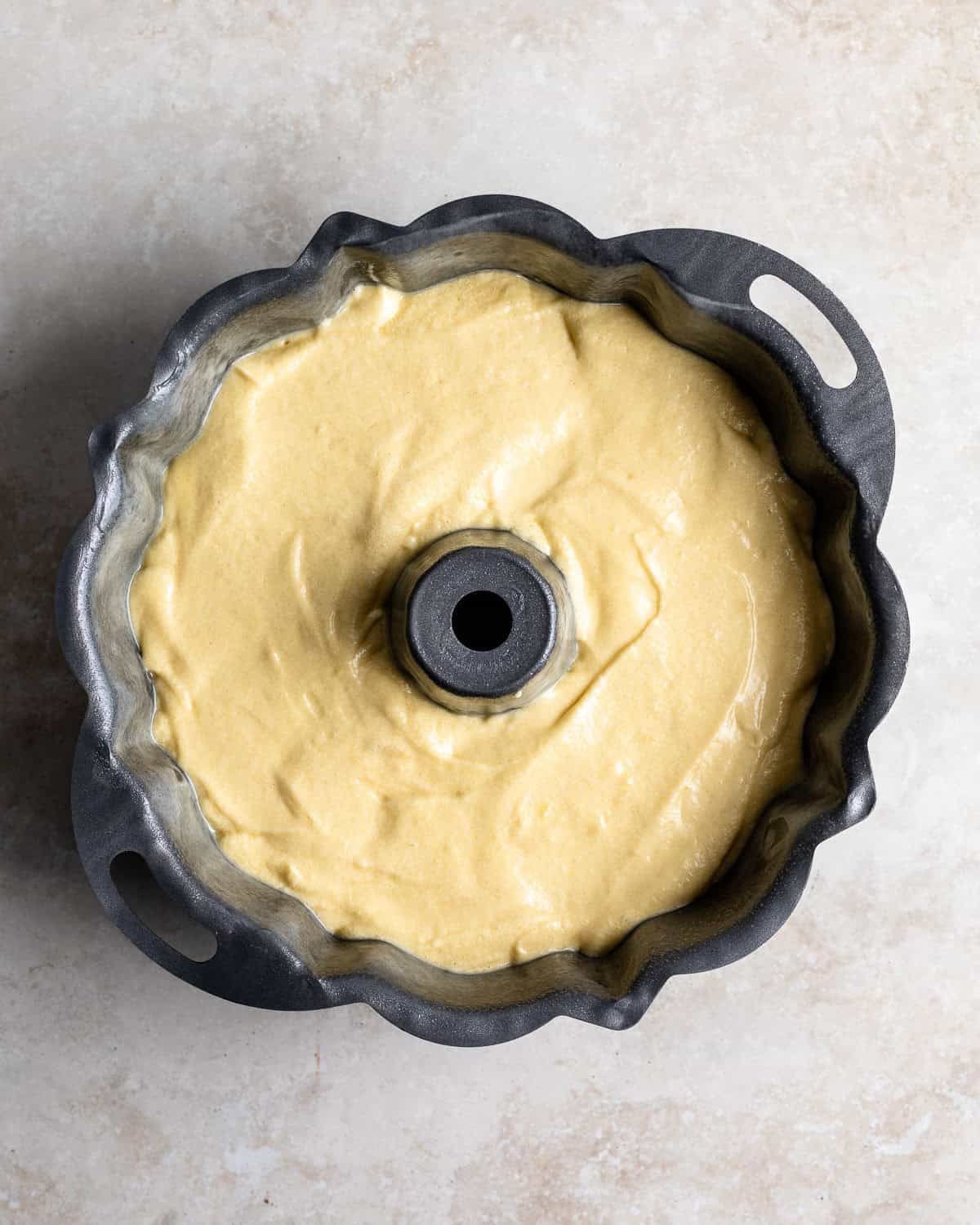
- Step 6: Pour/dollop the batter into the prepared Bundt pan, gently leveling off the top so it's even.
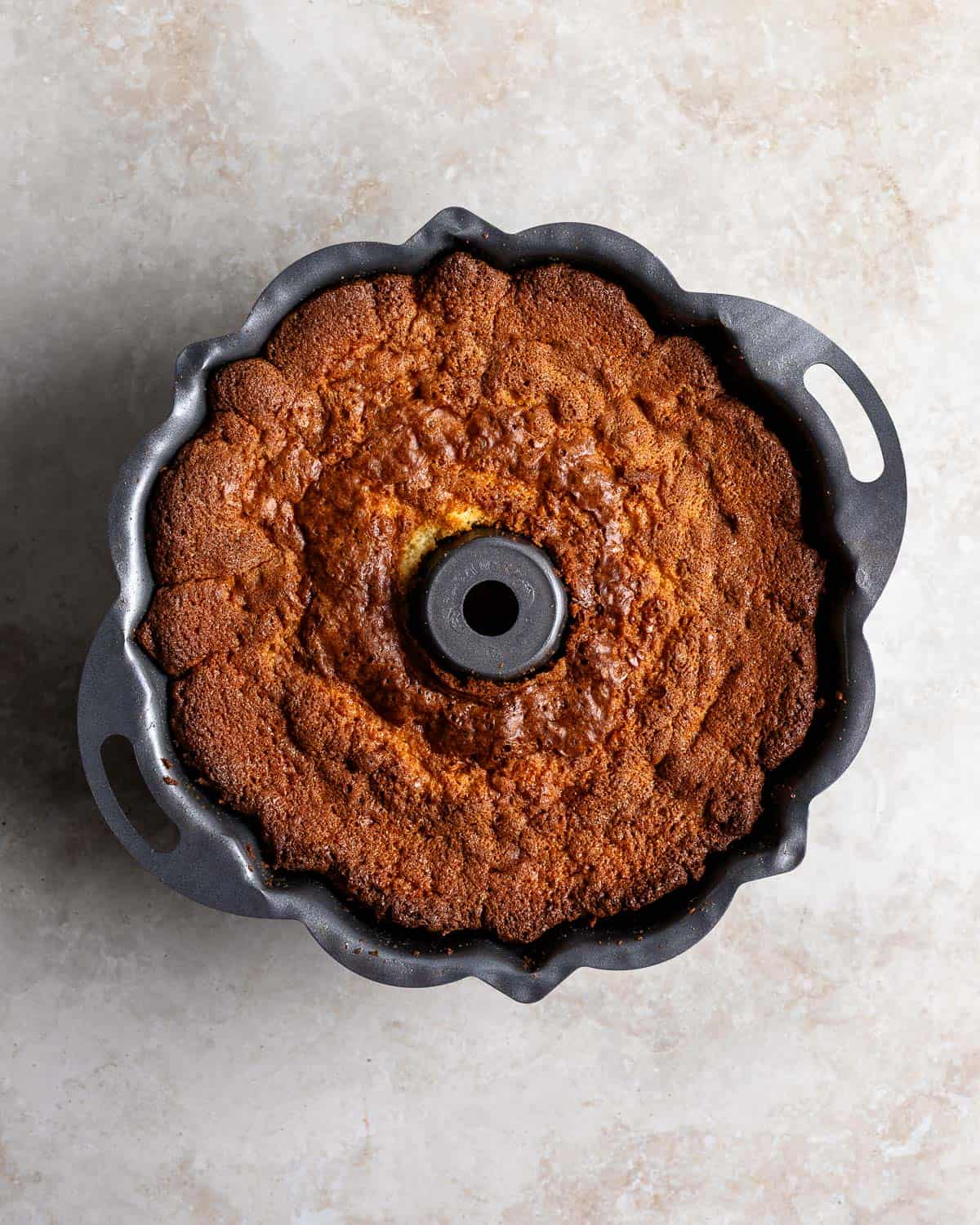
- Step 7: Bake for 50-60 minutes at 350°F, or until deeply golden-brown and a toothpick inserted into the center comes out clean. Let the Philly Fluff cool in the pan for 15 minutes.
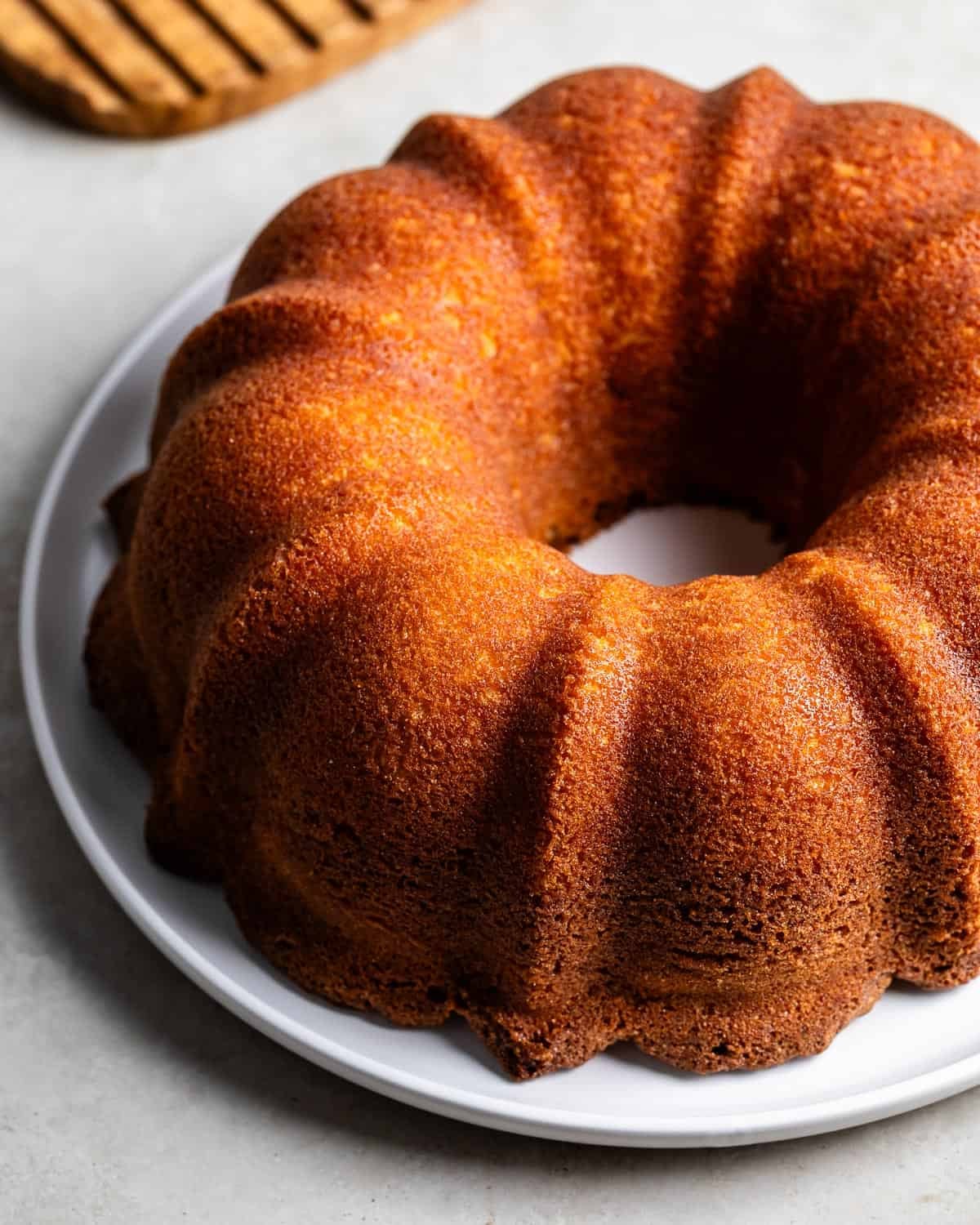
- Step 8: Once the time is up, very gently run a thin spatula alongside the edges of the pan to ensure the cake will remove cleanly, then invert it onto a plate to cool completely.
Tips and Tricks
- Don't skip greasing and flouring. Even with a non-stick Bundt pan, it's so important to thoroughly coat the pan with pan-release spray or with butter and flour to ensure a clean release. With all the work and ingredients that goes into making a big cake like this, I'd hate for you to have any trouble right at the end.
- Room temperature ingredients for best results. Softening both the butter and cream cheese and bringing the eggs up to room temperature allows the batter to come together most efficiently for an even, soft texture.
- Don't use a smaller pan. There's a lot of batter here and you'll overflow a smaller (10-cup) Bundt pan.
- Take its temperature. While you can use the toothpick test to determine when your Philly Fluff cake is done, an instant-read thermometer can help you tell when it's perfectly baked. Aim for around 205-210°F.
- Wait to coat with powdered sugar. Powdered sugar will melt and disappear into a warm cake, so hold off decorating it until it has completely cooled.
- Serving suggestion. I usually serve Philly Fluff cake alongside fresh berries. It has such a rich flavor and moist texture that I don't find it needs whipped cream, ice cream, or anything extra like that (though go for it if that's your preference).
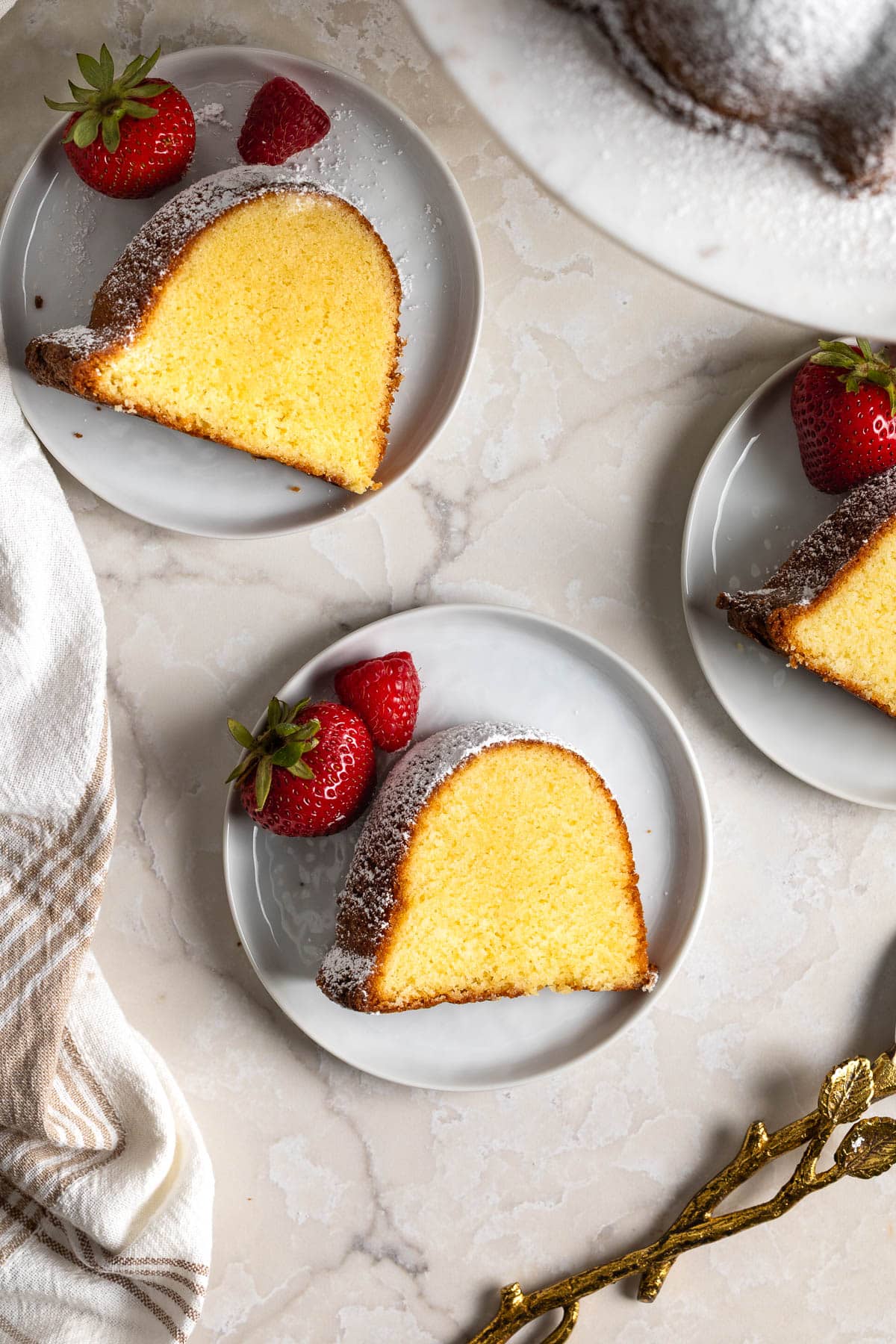
Serving and Storing
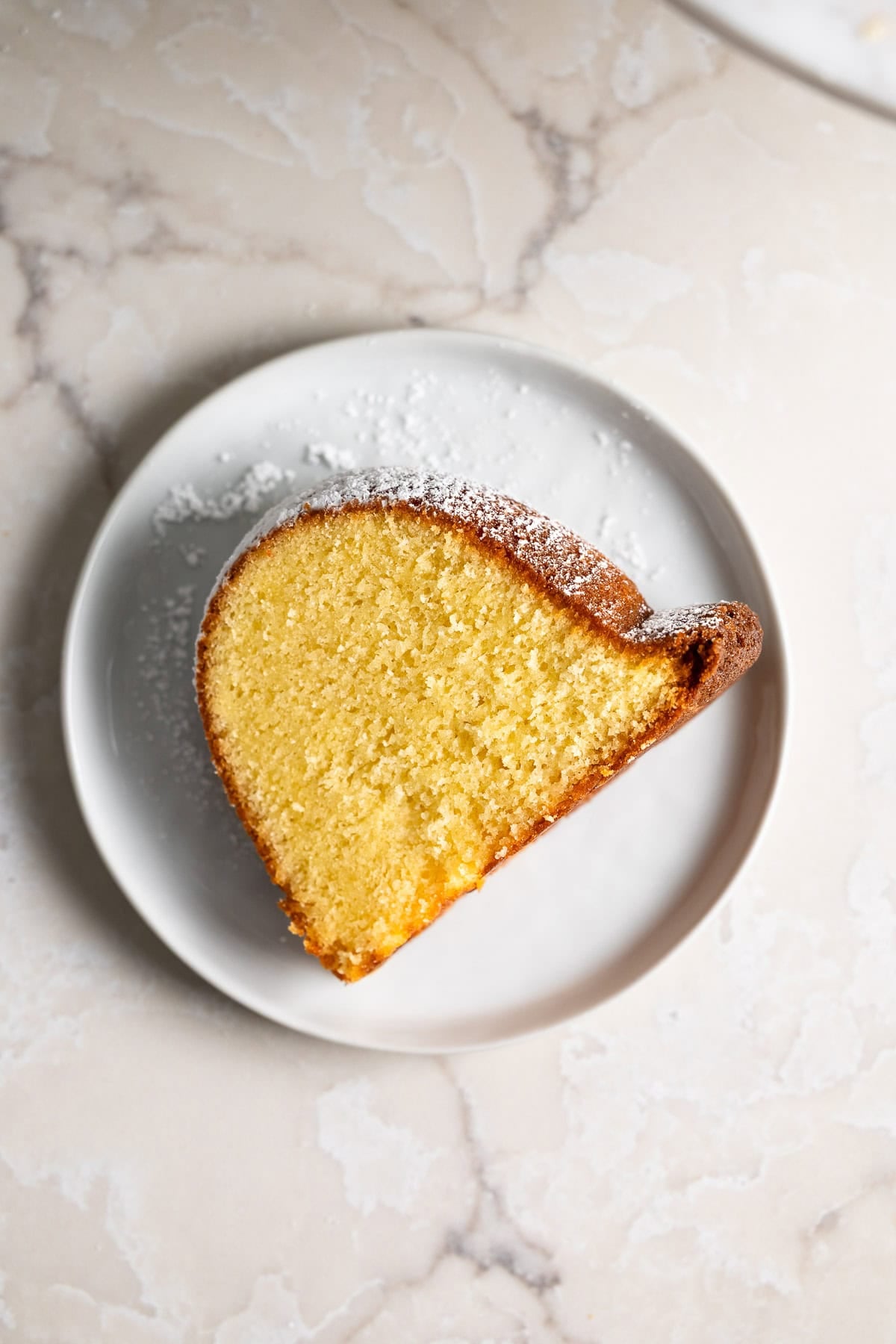
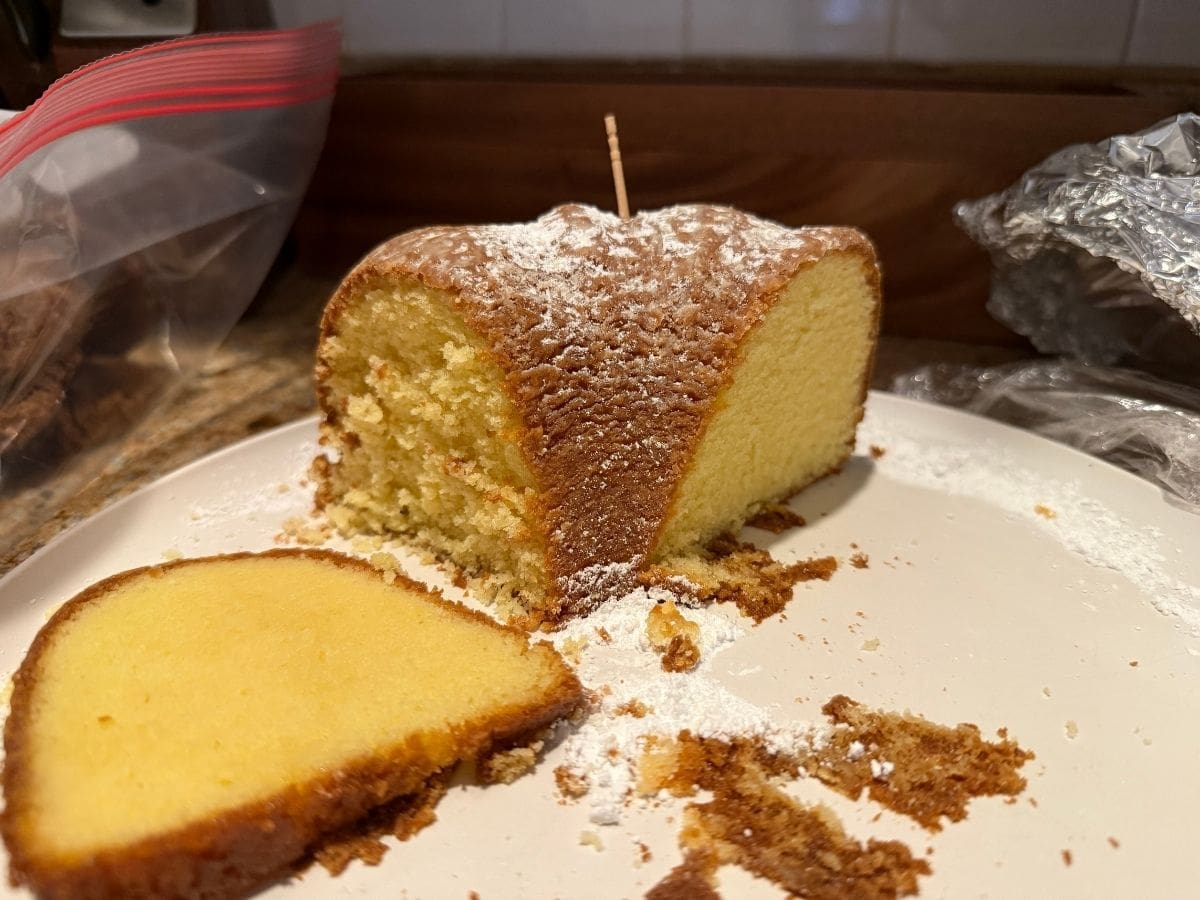
Serving: If possible, I recommend baking a Philly Fluff the day before you plan to serve it. In my experience this leads to ultra smooth, clean slices as the cake has more time to settle in.
Once it's entirely cool it's still fine to slice and serve same-day, but the slices may be a bit more shaggy. See the difference below: the slice on the left side of the cake was made hours after baking, while the right slice was made the following day.
Storage: Once cooled, store Philly Fluff cake at room temperature for up to 4-5 days covered with plastic wrap to retain moisture. The refrigerator can dry out baked goods.
Freezing Philly Fluff: If you know you won't be able to get through all of the cake in that time frame, snugly wrap individual slices in plastic wrap, then place in a freezer bag (with all excess air pressed out) and freeze for up to several months for optimal freshness. The slices thaw pretty quickly at room temperature when ready to enjoy.
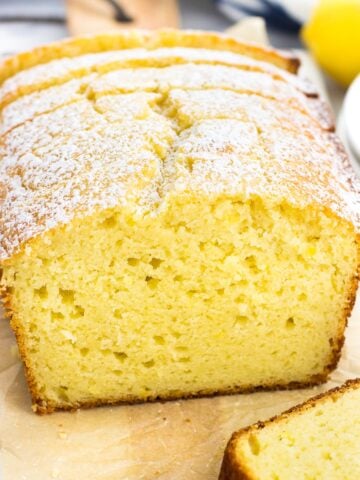
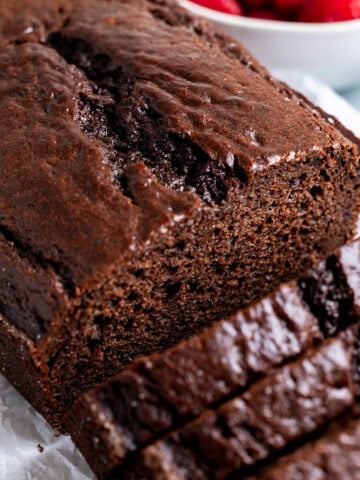
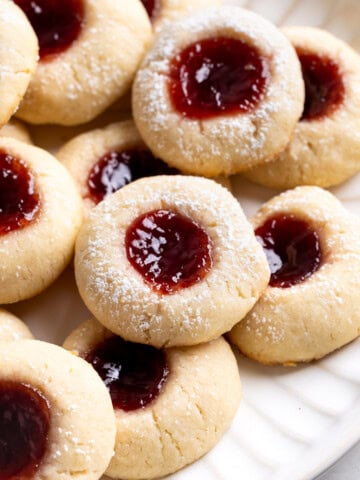

Did you enjoy this recipe? I’d love for you to leave a star rating and a comment review in the recipe card below!
Philly Fluff Cake Recipe
Equipment
- 12-cup Bundt pan (no smaller)
Ingredients
- 8 ounces (227g) unsalted butter softened, see notes on butter type and if you'd like to use shortening
- 8 ounces (226g) full-fat cream cheese block, softened
- 2 cups (250g) all-purpose flour
- 2 teaspoons baking powder
- ¾ teaspoon table salt
- 2 ¼ cups (450g) granulated sugar divided
- 6 large eggs at room temperature
- 2 ½ teaspoons vanilla extract
- Powdered sugar for serving
Instructions
- Make sure your butter and cream cheese are softened to room temperature, and your eggs are also up to room temperature. This helps achieve more efficient blending of the ingredients for an optimal cake structure.
- Preheat oven to 350°F, ensuring a rack is situated to where the Bundt pan will sit in the middle of the oven. Generously grease and flour a 12-cup Bundt pan. I find it easiest to get full coverage with a nonstick baking spray, but you can also thoroughly rub a stick of butter in the pan, sprinkle in the flour, and tap out the excess. If after doing so you've noticed missing spots, brush a little melted butter on them and repeat with the flour. Set aside the prepared pan for now.
- Add softened cream cheese and butter to the bowl of a stand mixer and beat on medium speed for 2-3 minutes, or until well-combined, lighter in color, and increased in volume with a fluffy consistency.
- In a separate medium mixing bowl, whisk together the flour, baking powder, and salt. Add the combined dry ingredients to the bowl with the butter/cream cheese and mix on low speed until the dry ingredients are evenly worked in. The batter at this point will be fairly stiff and thick.
- Add 1 cup of the sugar and the eggs to the batter, adding the eggs one at a time, beating well after each addition. Stop to scrape down the sides of the bowl as needed for even mixing.
- Add the remaining 1 ¼ cup sugar and the vanilla extract. Mix well until the batter is fully smooth (don't skimp), stopping again to scrape down the sides several times to ensure an even consistency.
- Pour the batter into the prepared Bundt pan and smooth out the top. Bake for 50-60 minutes, or until deeply golden-brown, the edges are coming away from the sides of the pan, and a toothpick inserted in the center comes out clean. If you have an instant-read thermometer, even better: the cake is done when the center reaches about 205-210°F.
- Let the cake cool (in its pan) on a wire rack for 15 minutes. Carefully tuck a thin, flexible spatula around the edges to make sure the cake isn't stuck to the pan, then invert it onto a wide, flat plate or cake stand to cool completely.
- Once the cake is completely cooled, dust generously with powdered sugar before slicing and serving.
Notes
- Butter: I highly recommend using unsalted European-style butter (not cultured) over standard butter sticks for the extra fat content and more luxurious flavor.
- Note on shortening: If desired, you can replace 4 ounces of the butter with ½ cup vegetable shortening to more closely follow the original recipe. This may produce a slightly lighter texture at the expense of some of the flavor, so the choice is yours.
- Pan size: Don't use a smaller 10-cup Bundt pan as the batter will likely overflow.
- Measuring flour: If not using a scale, use the spoon-and-level method. Spoon flour into your dry measuring cup until it's overflowing, then use a straight edge (like a knife or the flat handle of the spoon) to level off the top without packing the flour into the cup.
- Cleanest slicing: If possible, I recommend baking this Philly Fluff a day ahead of slicing and serving for the very cleanest slicing.
- Storage: Once cooled, store for 4-5 days at room temperature covered with plastic wrap, or under a cake dome. Avoid the refrigerator as this can dry it out.
- Freezing: Wrap leftover cake snugly in plastic wrap (this works very well with individual slices) and place in an air-tight freezer bag with all excess air pressed out for up to 3 months for the best freshness. Frozen cake will thaw quickly at room temperature.
Would you like to save this?
Plus receive periodic recipe newsletter emails.
Nutrition
Nutritional information is provided as an estimate. As it can vary due to many factors (brands used, quantities, etc.), we cannot guarantee its accuracy.
Food Safety and Nutrition Disclaimer
Comments
No Comments