

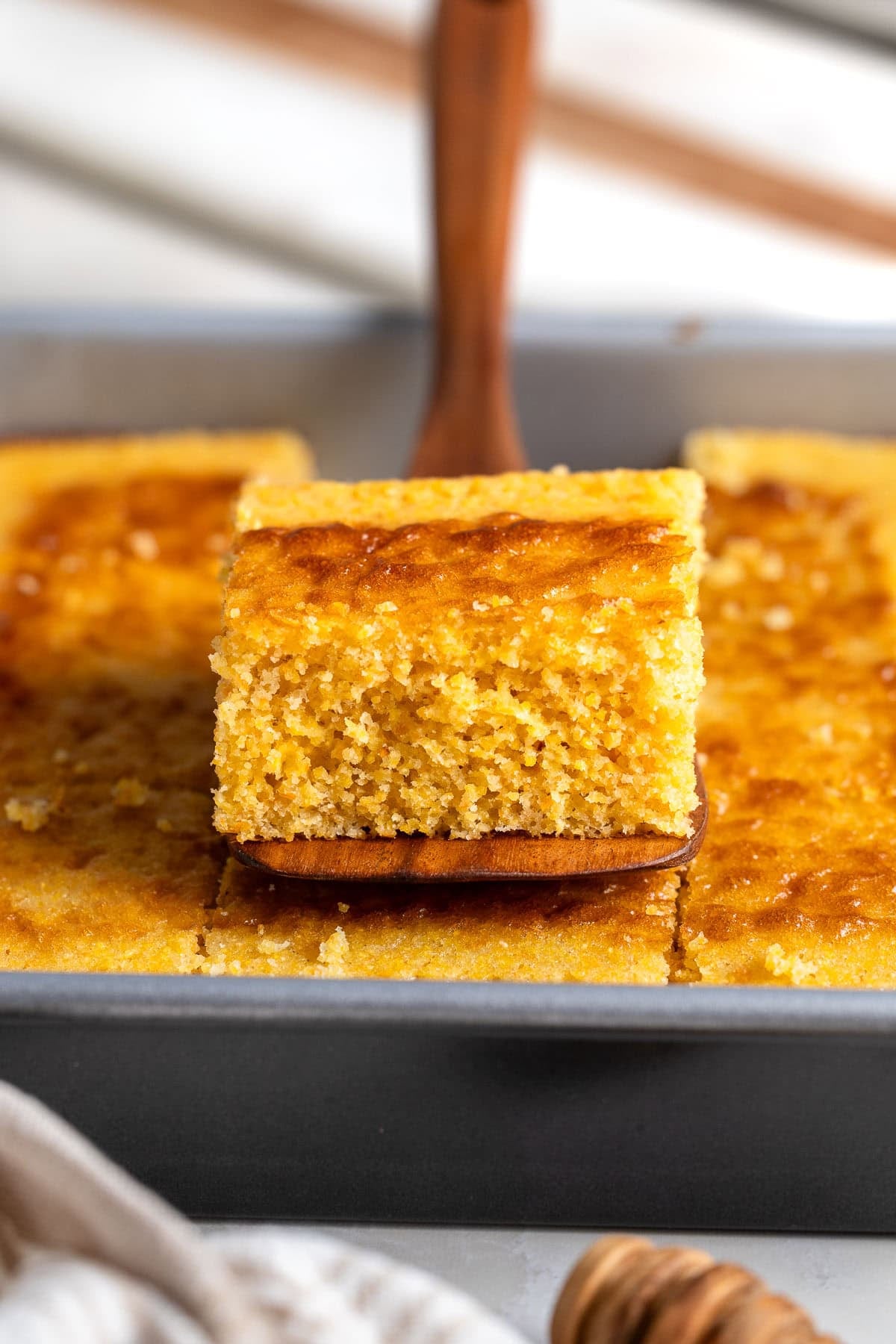
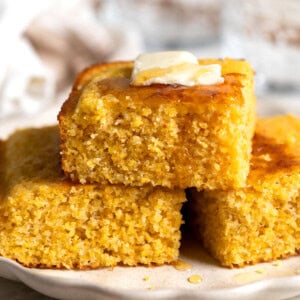
Made all in one pan, polenta cornbread develops a moist and tender texture without any grittiness, thanks to an easy buttermilk soak. Lightly sweetened with classic cornbread flavor, this more coarsely-ground cornbread recipe is easy to sub in if you're without your regular cornmeal.
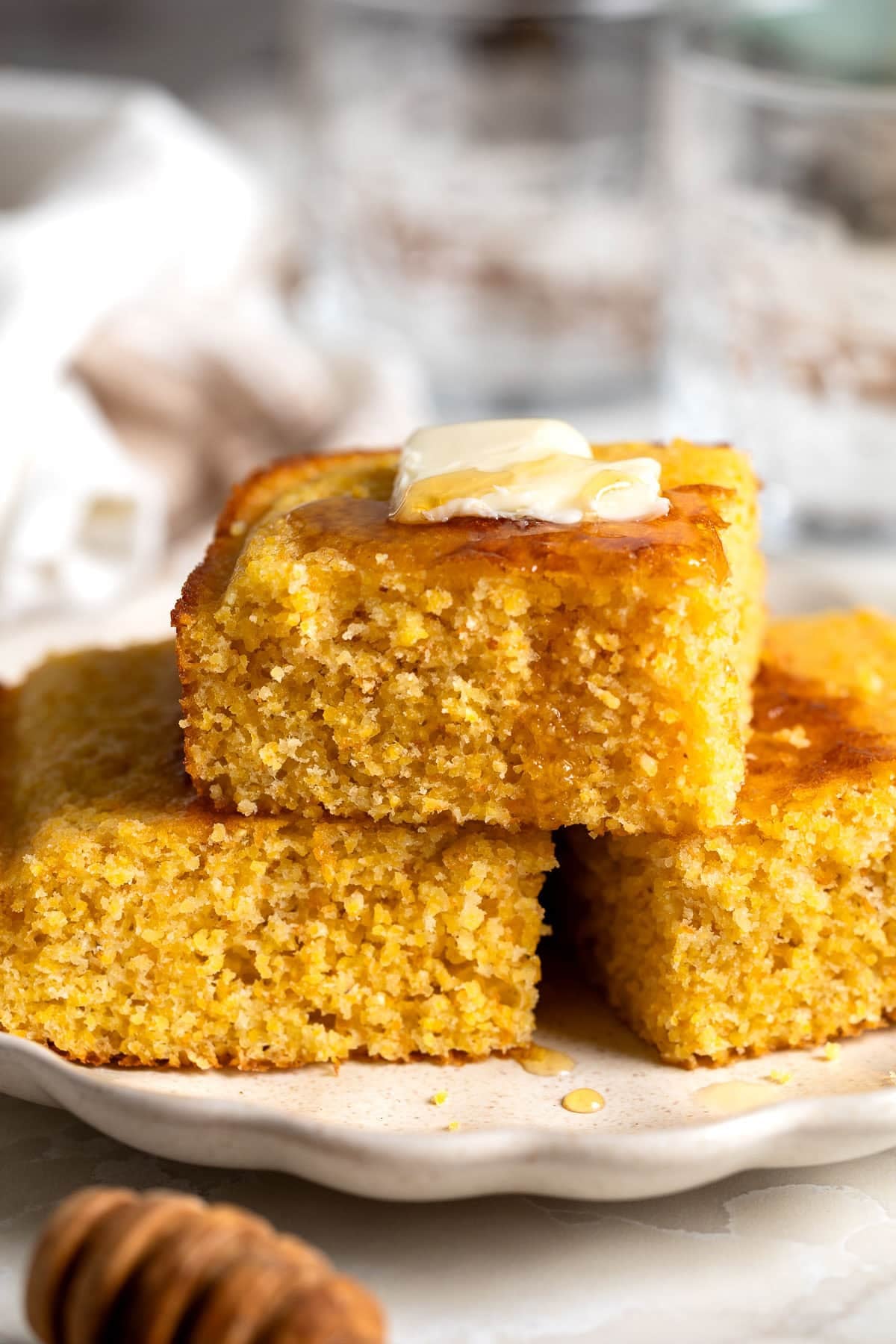
In an exceptionally early spring cleaning move (spring cleaning pre-season, if you will) my pantry got an overhaul in which I found not one, but two more bags of polenta than I thought I had.
I know what happened. Life lately has been BUSY and I've not been able to pass up the convenience of making creamy polenta from a tube. My similarly simple (but 25-ish minutes longer) recipe for polenta in the Instant Pot has been relegated for the time being.
So time to get creative! My mind went to wondering if you could make cornbread with polenta and I thought...well why not. With a few intentional tweaks to my favorite honey cornbread recipe, this polenta cornbread came to be.
With a slightly larger crumb, quintessential cornbread flavor, spot-on moistness, and an easy trick to avoid any grittiness (!), this cornbread made from polenta really gets the job done.
Polenta vs. Cornmeal
Without getting into the specifics of it all (I'll leave that to Serious Eats), cornbread is typically made with fine- or medium-ground cornmeal while polenta is coarse-ground. There are more differences than that, but for the purposes of cornbread, the larger-sized bits don't get the chance to soften fully with how quickly cornbread bakes, so cornbread made with polenta has the reputation for being hard, gritty, and unpleasant to chew. One thing counteracts that...
Soaking Polenta Before Baking
Letting the polenta soak in buttermilk is my #1 tip for making delicious cornbread with polenta. Cornbread batter doesn't rest ahead of its fairly quick bake time, so mixing dry polenta into a regular cornbread recipe won't allow enough time for it to soften. Here we give the polenta a head start by soaking it in most of the recipe's buttermilk for at least an hour before moving on with preparing the batter.
Recipe Ingredients
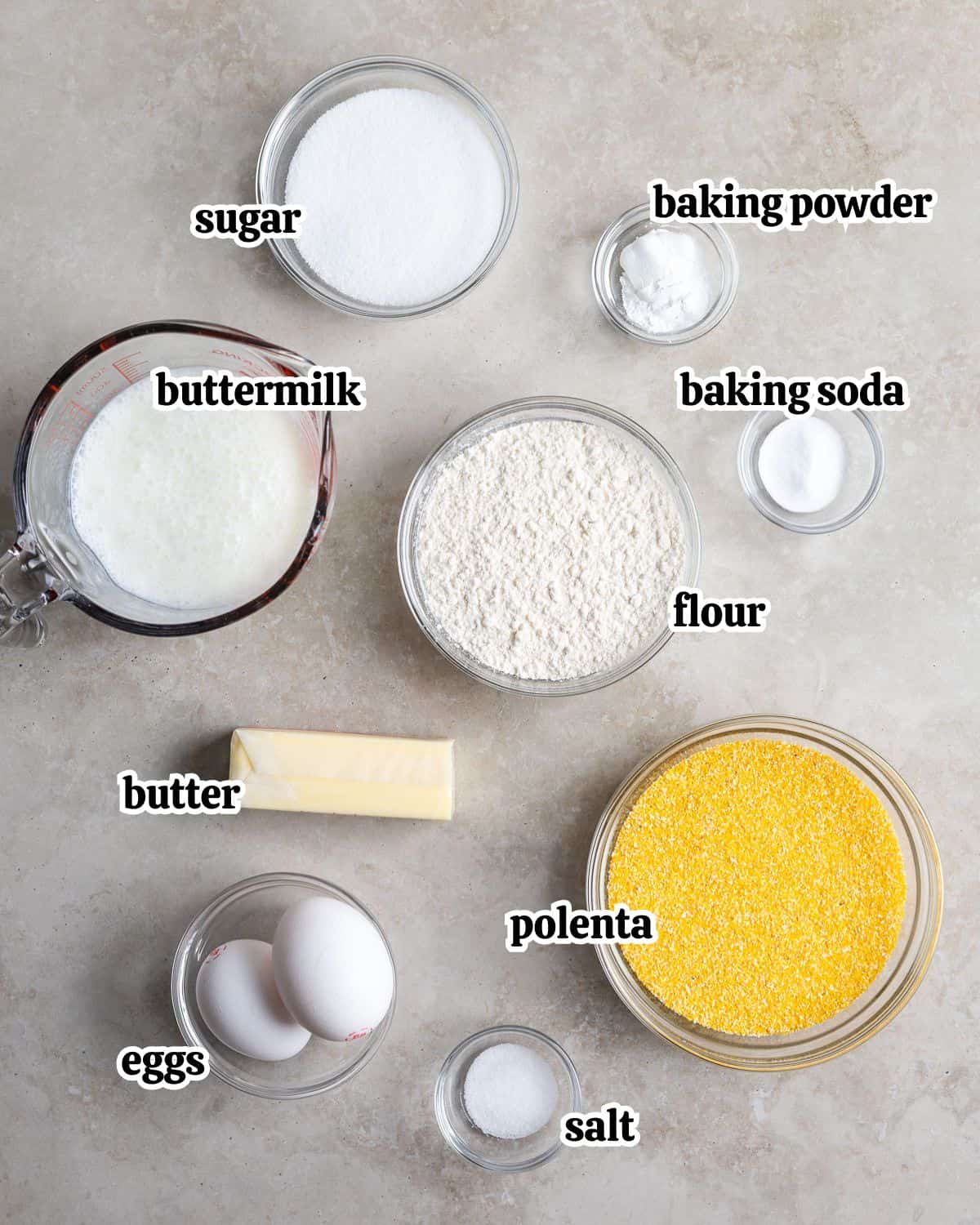
- Polenta: This is made from yellow corn and features a coarsely-ground texture, larger than what is typically used in cornbread recipes. It goes into this recipe straight from the bag and dry.
- Flour: Its finer bits benefit the structure of cornbread and helps develop a moist texture.
- Buttermilk: I really prefer store-bought buttermilk in baking recipes as the thick texture is just more luxurious, but steps for making a buttermilk substitute from regular milk are included below. Whole or low-fat is fine.
- Butter: Necessary for that classic cornbread flavor. Cooking oils can be substituted as the butter goes in melted, but keep in mind the flavor change that will happen.
- Baking powder: I recommend an aluminum-free baking powder, just in case you or someone else in your crowd has ever picked up on a metallic-tasting tinge in baked goods that use a fair amount of baking powder.
Step-by-Step Instructions
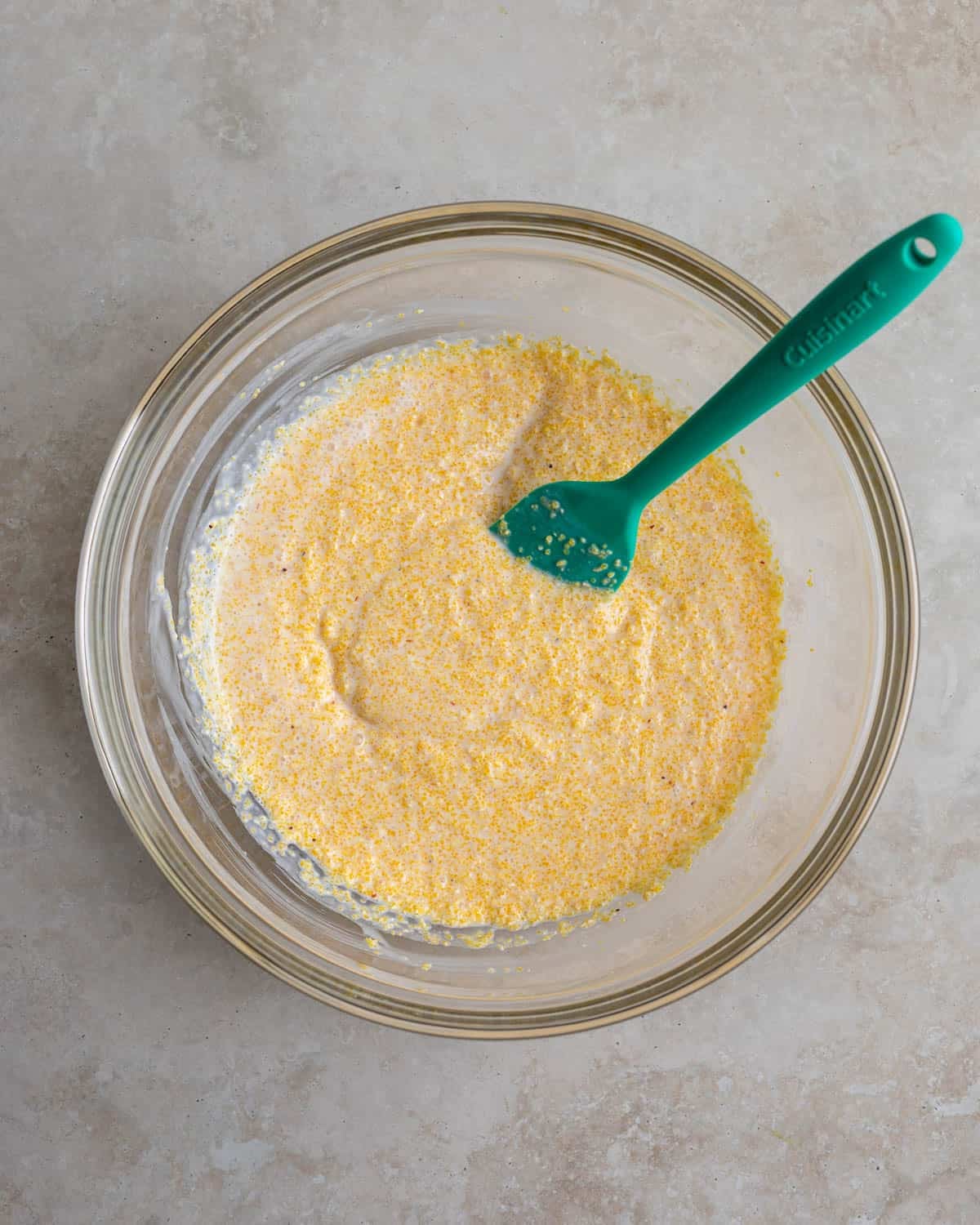
- Step 1: Stir together polenta and buttermilk, then chill and soak for at least one hour to hydrate the polenta.
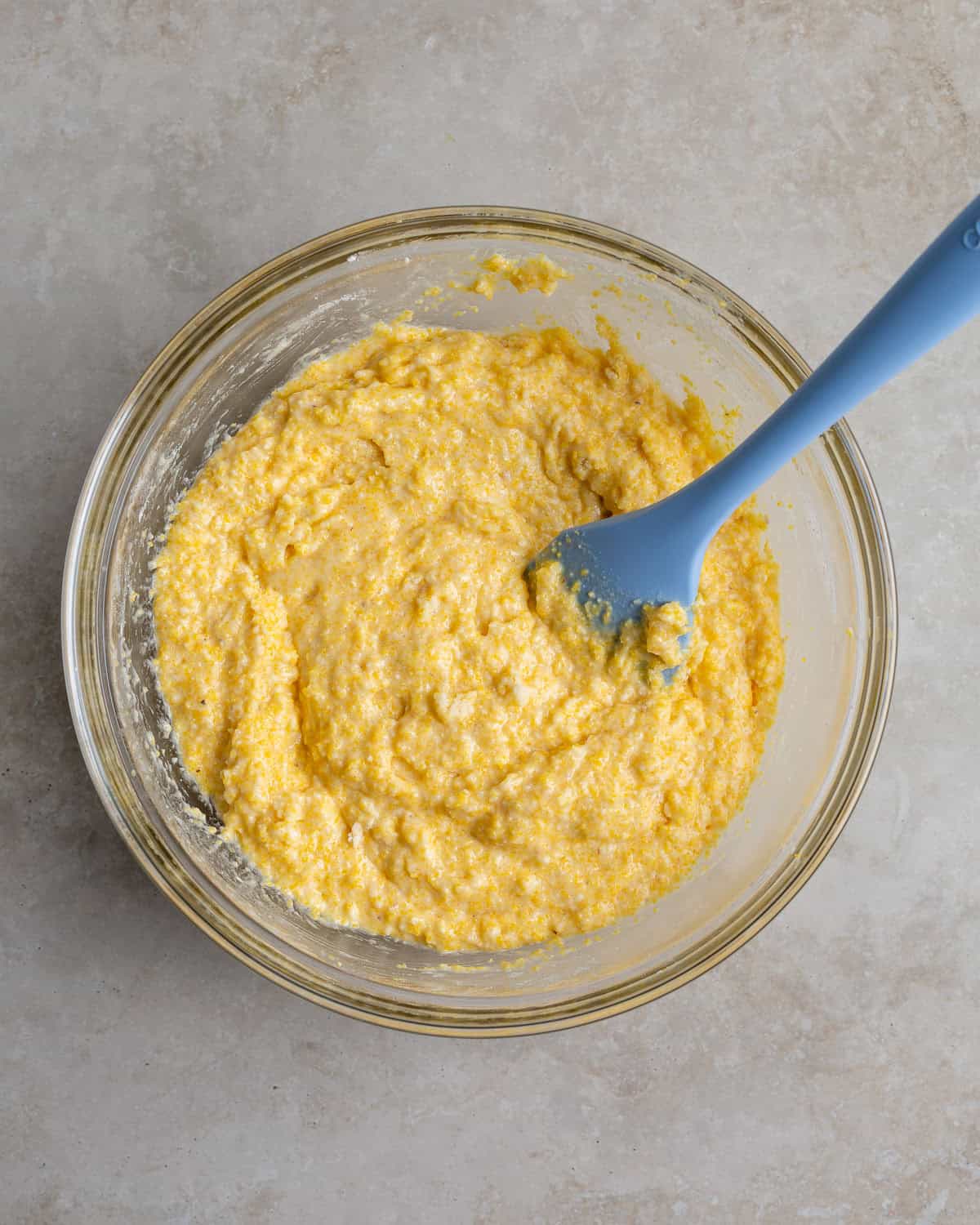
- Step 2: Mix in the rest of the wet ingredients, then the dry. It's normal for the batter to be lumpy and thick at this point.
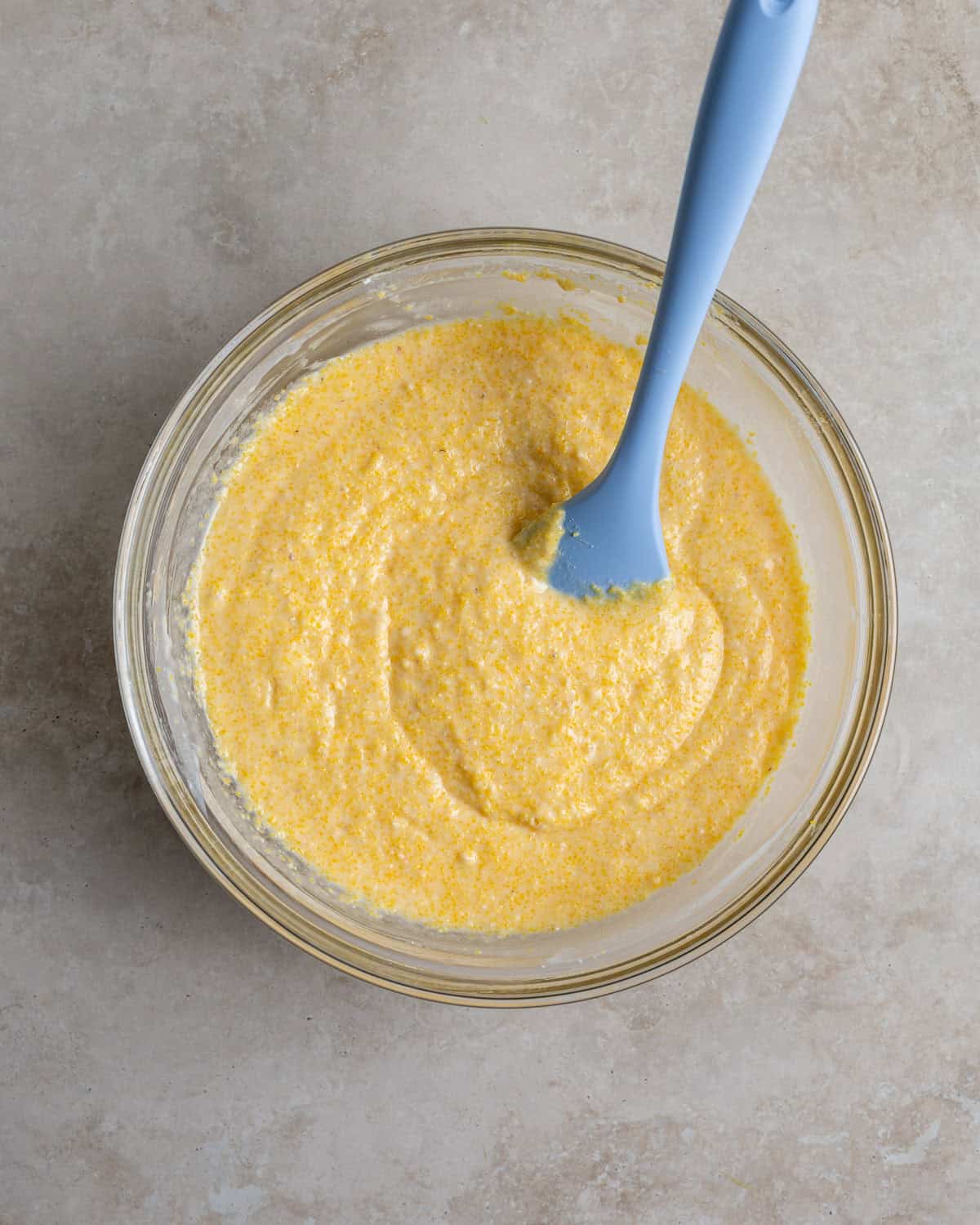
- Step 3: Stir in the remaining 2 Tablespoons of buttermilk to thin the batter out slightly.
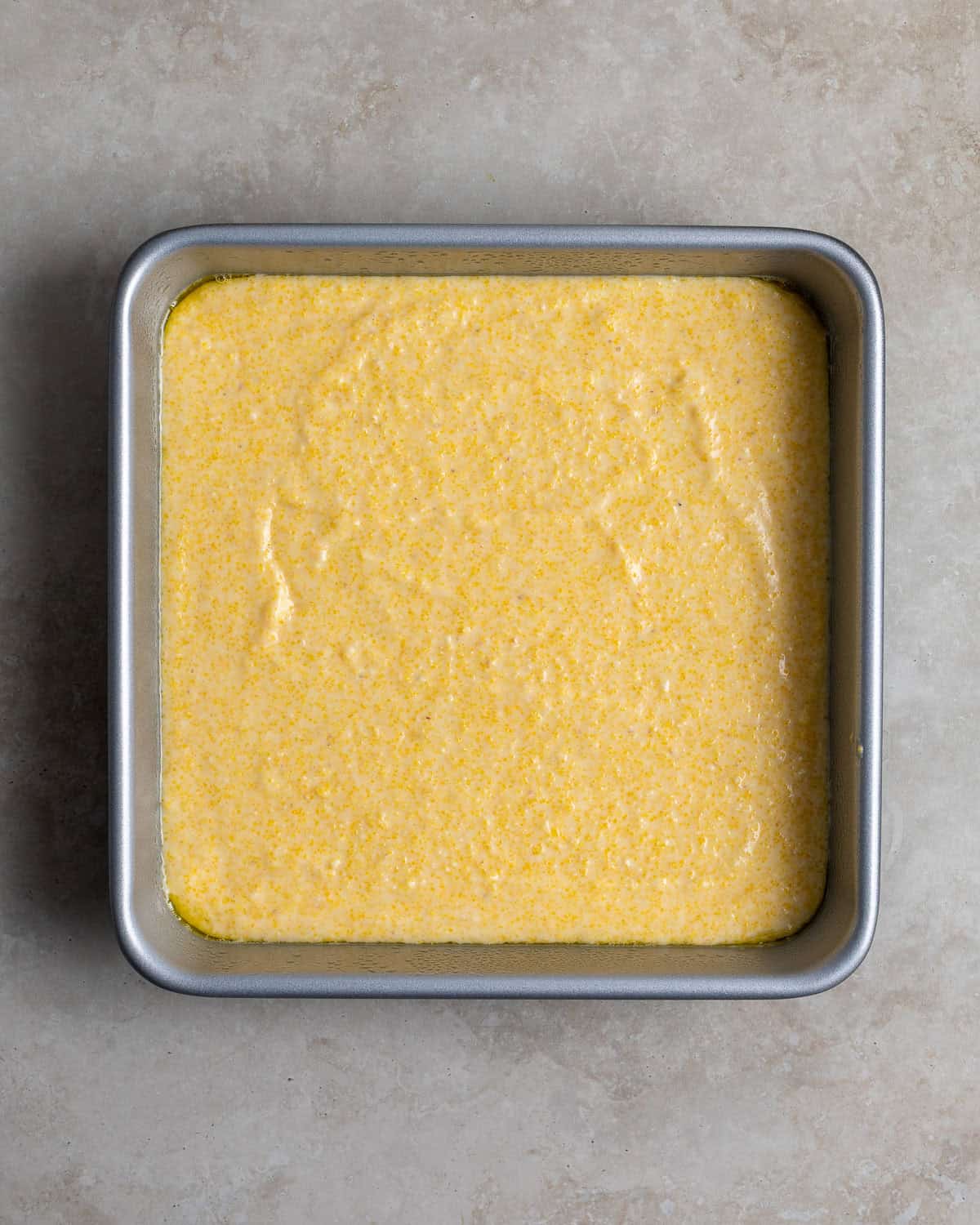
- Step 4: Pour the batter into a greased 9-inch square pan, then level off the top surface to be even.
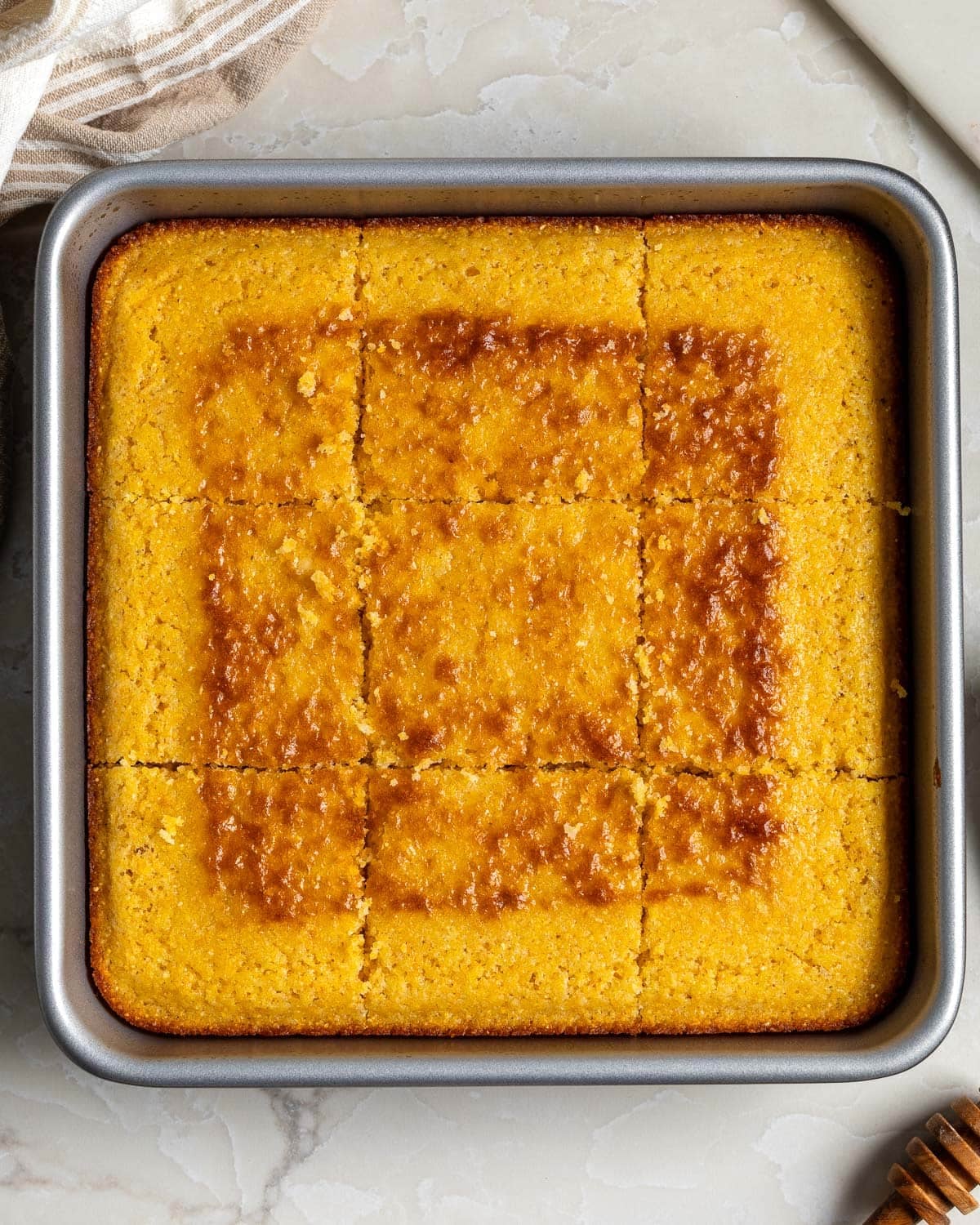
- Step 5: Bake at 400°F for 17-20 minutes, or until a tester inserted in the center comes out clean. The center will feel firm to the touch if lightly pressed. It's normal for the top to brown! Cool in the pan to room temperature or just slightly warm before slicing and serving.
Tips and Tricks
- Oil substitution: I'm no stranger to subbing olive oil into places it doesn't typically belong (hello, olive oil chocolate chip cookies) but after testing that here, I prefer the classic flavor of melted butter in cornbread. Even splitting the butter with extra-virgin olive oil was enough to impact the flavor noticeably. That said, oil can work structurally if you'd rather. I'd just choose a neutrally-flavored one like vegetable, canola, or light olive oil.
- A great pan for cornbread: It's the little things, but I'm continually impressed with the 9-inch square metal pan (paid link) I bought, if you're in the market for a new one. It's super heavy-duty so no warping in the oven, and bakes evenly.
- Serving suggestions: Anywhere you'd typically serve cornbread, like my time-tested turkey chili made in the Instant Pot. This polenta cornbread has that classic, slightly-sweetened cornbread flavor.
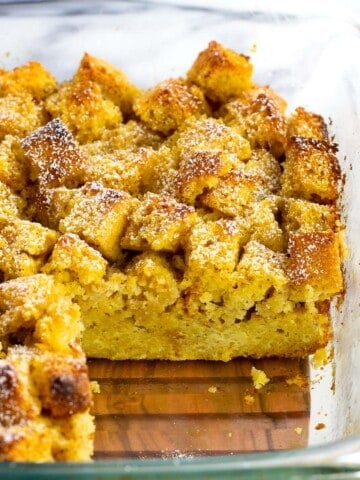
- Use up leftovers: Put leftover, slightly stale cornbread to use in baked cornbread french toast or make cornbread croutons.
Frequently Asked Questions
I'm not sure! Instant polenta is not available to me locally (and quite $$ online) so I haven't tested it. My concern would be a gummy or weirdly dry texture after instant polenta soaks because it's already par-cooked.
I think store-bought buttermilk is always thicker than a homemade buttermilk alternative made with plain milk, but it can do the trick. For this recipe I would add 1 Tablespoon plus 1 teaspoon (so 4 teaspoons total) of white vinegar to a liquid measuring cup, then pour in regular milk up to the 1 ¼ cup line. Let sit for 10 minutes to thicken, then stir. Use this to soak the polenta. Later on in the recipe you can just add 2 Tablespoons of regular milk when thinning the batter (this little bit doesn't need to be soured).
Yes, you should be fine swapping the all-purpose flour with your preferred GF "1-for-1" blend. I personally like King Arthur's Gluten-Free Measure-for-Measure blend. Polenta by nature is gluten-free, but I've noticed Bob's Red Mill makes a version of their polenta in a gluten-free facility, called out as such on the packaging, if that's an important distinction for you.

Did you enjoy this recipe? I’d love for you to leave a star rating and a comment review in the recipe card below!
Polenta Cornbread
Equipment
Ingredients
- 1 ¼ cups (200g) uncooked polenta
- 1 ¼ cups (300 ml) plus 2 Tablespoons (30 ml) buttermilk divided
- 2 large eggs
- 6 Tablespoons (85g) unsalted butter melted and slightly cooled
- 1 cup (125g) all-purpose flour
- ½ cup (100g) granulated sugar
- 2 teaspoons baking powder
- ½ teaspoon baking soda
- ½ teaspoon fine salt
Instructions
- Stir together polenta and 1 ¼ cups of the buttermilk in a large mixing bowl until all of the polenta is moistened. Cover and refrigerate for at least 1 hour - 90 minutes to 2 hours even better.
- Once the polenta has soaked, preheat the oven to 400°F. Spray a non-stick 9-inch square pan with cooking spray (or grease well with butter) and set aside.
- Whisk the eggs into the soaked polenta and buttermilk mixture, then pour in the melted butter while whisking. Whisk until evenly combined.
- Add the flour, sugar, baking powder, baking soda, and salt to the bowl and stir until just combined and no dry flour streaks remain.
- The batter will be quite thick at this point, so stir in the remaining 2 Tablespoons of buttermilk.
- Pour out the batter into the prepared pan and use a spatula to level off the top into an even layer. Bake for 17-20 minutes on the middle rack of the oven, or until the center is firm to the touch and a tester comes out clean. Let the polenta cornbread cool in the pan to room temperature or just slightly warm before slicing and serving.
Notes
- Prevent excess browning: If at any point you feel your polenta cornbread is browning too quickly, loosely tent a sheet of aluminum foil over top of it and continue baking until done.
- Buttermilk substitute: Add four teaspoons of white vinegar to a liquid measuring cup, then pour in regular milk up to the 1 ¼ cup line. Let sit for 10 minutes, stir, then use to soak the polenta. Later on you can just use 2 Tablespoons of regular milk to thin out the batter (it doesn't need to be soured).
- Storage: Store leftover cornbread at room temperature, wrapped snuggly in plastic wrap and placed in an air-tight container or bag with all excess air pressed out. It can also be frozen in this manner for up to 3 months for the freshest taste.
Would you like to save this?
Plus receive periodic recipe newsletter emails.
Nutrition
Nutritional information is provided as an estimate. As it can vary due to many factors (brands used, quantities, etc.), we cannot guarantee its accuracy.
Food Safety and Nutrition Disclaimer
Comments
No Comments